Author: Ram

  • A page from a book is more than that

    I notice my family, friends and acquaintances, not reading books.

    Some of them don’t have time in their lives right now, to dedicate an afternoon to even begin to read from a book they bought many years ago. This blog is not for them.

    A few don’t like to read books, they tell me. They have apparently lost interest in the written word. I am writing this piece, directly looking at them. Yes, I know who you are.

    I am kidding. I promise, I won’t preach why you should read. Nor would I prescribe a bunch of books on this last day of the year. I am kidding again.

    This is more about two moments from my 2021 trip around the sun. One acted as an anchor, giving me a sense of what I loved doing, and another that brought out the force in me, and gave direction.

    The Greeks again

    In February this year, on a lazy Saturday afternoon, I saw a tweet by a speech consultant @JohnfBowe. His article explained how two thousand years ago, the Greeks figured out that public speaking – the art of rhetoric – is a foundational skill to be acquired by everyone. Yeah, for once, it is not all about philosophy when it comes to the ancients.

    I ended up buying his book. It begins with the story of his cousin whose life takes a dramatic turn after joining Toastmasters. The guy never left basement until he was fifty nine years old, but soon got married, and overcame shyness (not necessarily in that order), helped by the world’s largest organisation devoted to the art of public speaking.

    John’s book made me reflect on the way I do presentations. Content is king, they say. I no longer start my preparations researching for what to include. The recipient(s) of the message take centre stage, more than the message itself. Audience is king.

    I reached out to the nearest club in Canberra. I wasn’t shy, but curious. I was welcomed into the Woden Valley Toastmasters club as a guest, a pivotal moment for me this year. I soon became a member, learning how to talk more clearly, persuasively but mainly, to keep the focus on my audience, what would be valuable to them. And to ramble less.

    Incidentally, around the same time in March, I got an opportunity to present SAP’s product strategy at a customer’s town hall meeting addressing roughly 150 members of their IT team. I remember spending more time on the question: What do I want them to think and feel, when I finish talking.

    A random tweet guided me to the book about ancient Greeks, eventually taking me to the Toastmasters, on my way to a successfully delivered talk.

    Winning is the (only) way

    Later in July, I faced a sudden bout of confusion and uncertainty about the way my role was perceived at work.

    One book brought back the fighter in me. It wasn’t a random tweet this time, but a slice of podcast conversation with the NBA star Chris Bosh talking about a book that shaped his thinking: The way and the power – Secrets of Japanese Strategy. Its about how a samurai master deals with confusion and uncertainty; one who controls his mind. One who would not lose. I ordered it immediately.

    I can’t say much more. But reading a couple of chapters, it felt as if I had flipped a switch in my mind. I woke up one morning and decided to win. Not merely adapt or survive or manage a situation. To win.

    You want the whole meal, not juice

    Why bother with a book these days, if one can acquire such insights through tweets and podcasts? I sense, reading a book – even skimming through a few pages – is way different than trying to grasp ideas distilled by someone else – a secondary process. It is the difference between eating a wholesome meal and drinking a juiced up version.

    A book could change the way you think about this world. Your world.

    Three sixty five days from now, on another new year eve, I will want to hear from you about the pages and words that influenced you.
    For the ones in my cohort too busy to read: One page consumes three minutes out of one thousand four hundred and forty minutes in a day. A typical book has three hundred pages.

    I rest my case.

  • Explore

    Explore

    What if I tell you, Christopher Columbus was not really an explorer.

    Well, I am not asking you to reconsider a historical fact. Am I even qualified to talk about exploration, while real explorers do their wild and uncertain things, I sit on my lazy ass on a quiet and comfy chair in a corner of my house?

    I am only interested in figuring why exploring is a fun pursuit. Exploration, not in the geographical territory per se, rather the “i want to explore more options before i decide” kind; exploring ideas and insights that change the way we think and transform us. Such a skill is a superpower, especially for knowledge workers.

    Suppose, your boss asks you on a Friday evening to come up with a completely fresh approach or an idea by Monday morning (it could be about a product, sales pitch, presentation or a new venture)

    And assume, that for some reason, google is down, internet connectivity is lost for your whole town during the weekend; however you have access to your bookshelf, your local library and can talk to your friends and colleagues in town.

    How will you go about your research? Which book(s) would you look up ? Who amongst your peers would you go to?

    The idea of (re)search or exploration has been key to our thinking and thus, survival. Often we start with building on existing ideas, contacting known people. If we are lucky, we get useful points, connections between those, and once in a while, stumble upon something new – something we never knew it existed when we began the pursuit.

    We all have been using the term, search so loosely. Tamara Munzner’s book on data visualisation has this matrix / table that made me think more clearly about the vagaries of search.
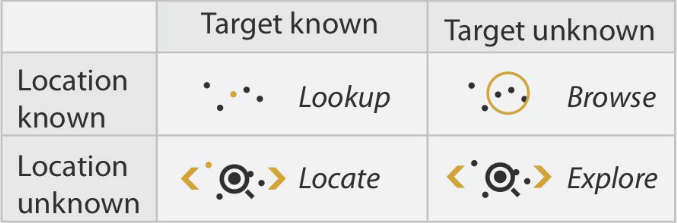
    Lookup: most of the time, we know what we are looking for, and where to find it – like in your neighbourhood grocery store. You know what you are looking for, say milk. You remember where to go and fetch it. Easy and efficient. Why? So much organising has gone behind the scenes. I am not sure if it is even possible to organise and store information/ideas like a grocery shelf.

    Browse: Sometimes we don’t know what we are looking for, but very clear about where to look. Example: in a library, you know there are enough gems buried inside those pages. All you need is time to browse a bit, and with some luck you might find something relevant. You might even stumble upon something new. This is fun – and efficient at the same time. Perhaps more exhilarating compared to fetching milk from your grocery store.

    At the same time, a bit of organising is a pre-requisite to make this work. You should have accumulated related ideas or books in one location that you can go to. Or subscribed to Netflix, where the algorithm does the job for you – to keep you constantly stimulated.

    Locate: this is like searching for your missing car keys. You know what you are searching for, but don’t know where it is. Also, this is where Columbus comes in. You see, in 1492 he set out “to find a direct water route west from Europe to Asia, but he never did”, landed instead on a different continent. He had his target/destination (Asia) known but the location (route) unknown. Thus, as per this matrix’s strict definition he is not an explorer, just a locator. And he failed at that too. There is even this blog that talks about how his GPS failed him big time. In the end, he returned empty-handed, frail, poor and without any recognition.

    Sorry, I am taking a bit of creative liberty here. My point is: when we set out to find new ideas or insights, lot of time and energy is wasted in looking in the wrong direction. One of my simplest life-hacks is to ask for directions: the “right” colleague who might lead me to the “location” of many useful and interesting things. Because, most of the times, we don’t know what we don’t know.

    Who Lucky: Jim Collins, the author of the book Great By Choice, has coined this phrase who lucky. “you get, not just luck in life, but “who” luck….And “who” luck is when you come across somebody who changes your trajectory or invests in you, bets on you, gives you guidance and key points.” (quote from Jeff Hilimire’s blog)

    Finally, explore: The dictionary definition of explore: travel through an unfamiliar area in order to learn about it; inquire into a subject in detail. But as per the matrix above, explore is: we don’t know what exactly we are looking for, and we have no clue where to start searching. That sounds like pain. But imagine, if Columbus convinced his Spanish financiers that he is simply out on a voyage to discover something, no promises. He was better off in not setting any expectation, choosing to ride the vessel of uncertainty, with his mate named luck, and serendipity as his diet.

    That would have been fun. The kind of exploration I am talking about.

    However this pursuit is not trivial; not a reckless exercise, not without any structure. Here are a couple of useful techniques to explore:

    Visual thinking. For me, this is less of a technique, more of trying to be human. Once in a while, get off your device, walk outside and look up, locate the sky and browse the many stars. The change in visual stimulus is all you need sometimes. For a more earthly example, if I need an idea for presentation, I google the topic (eg. Technology Platform) and go “images”, and see the many illustrations. Something clicks in the mind, as this post illustrates how creative ideas emerge out of visual thinking.

    Another useful one is Lateral Thinking, popularised by Edward de Bono. An example is Random Simulation. I use this when I need an opening word or a central theme for a speech or a blog. This is how it works: Choose a random number from 1 to 10, say 7. Open a random page of a random book; find the 7th word in the 7th sentence of that page. Reflecting on that word, its meaning, would evoke a feeling, trigger an idea, shape our thoughts.

    (for this blog, that random word turned up to be destroy; no wonder I have been cynical about Columbus all through this piece)

    The power of exploration is: only direction matters. Your curiosity is the direction. Go where that curiosity takes you, following what appeals to you, not worried about the number of steps taken, points collected, victories or failures; not anxious about reaching any destination.

    In any case, as Yogi Berra said, if you don’t know where you are going, you have a good chance of not reaching there.

    PS: This is the final of a 3-part blog post “How to Think Better”.

    Part 1: “How to Think Better – Externalise”

    Part 2: “Uncategorised” aka How to Think Better – Categorise
  • Uncategorised

    Uncategorised

    I bet you won’t continue reading this blog beyond a point, unless you find something new. Right at this moment, in your brain, a bunch of neurons are firing to figure out what this new is. I wonder if you got some ideas from the title, or some of the pictures below which your eyes cannot help scanning. I suspect you have mentally tagged this blog already – technical, boring, long. Interesting (hopefully).

    Categories

    Our brain is wired to perform instant pattern matching and categorisation. Categories have strict boundaries which help us compare a “this” from a “that”.

    This skill helped us survive as we made quick decisions under uncertainty – by differentiating between a branch of a tree and a snake; between a cold, warm or hot object. All thanks to the much evolved part of our brain: prefrontal cortex.

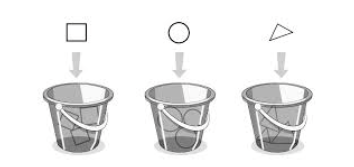
    Now during the information (delu)age, we need this skill even more, as we distribute every bit of new information to various buckets. Worse, we do pattern matching even when the data doesn’t make any sense. Lets attempt this puzzle:

    Kiki and Bouba are two nonsense words from a non-existing language. Can you suggest a match between the words and the two images below ?

    Analogies

    Cognitive scientist Douglas Hofstadter says categorisation and analogies are the way ALL thinking occurs in our brain. Watch him narrate this (15 minute into this hour long video).

    We have so little control over this process. If our mind always compares and contrasts – as we see, hear, smell, touch and so on – several downsides occur. In a rush to make a quick judgement, we often make the wrong call.

    Prejudice

    I won’t talk about serious topics like racial stereotypes and unconscious bias in this blog. But I share a recent experience at the food court, when a seemingly innocent comment from the lady at the counter made me cringe a bit.

    I sensed her watching me order rice and vegetarian curry with an additional order of papad. The many neurons in her brain didn’t have to perform heavy gymnastics to categorise me, as she suggested “so, you must be a south Indian?” I nodded. She said, feeling settled, “makes sense!”

    She wasn’t wrong this time. No harm done. (maybe my moustache was a give-away). But not all of us are right when we carry out some lazy, sub-conscious thinking. When we assume.

    Cognitive Bias

    Daniel Kahneman is considered the father of behavioural economics. In his work, he underscores the fact that humans are not rational at all while making decisions. The nobel laureatte’s book Thinking Fast, Thinking Slow has made me more aware – if not smarter – as I learnt about various cognitive biases. A sample for you: Confirmation Bias – the tendency to search for or interpret information in a way that confirms one’s preconceptions. (eg. anti-vaccinators).

    Rob Dobelli’s The Art of Thinking Clearly is another easy-read that I recommend.

    Black Swan

    Being aware of such biases helps us avoid an ontological shock.

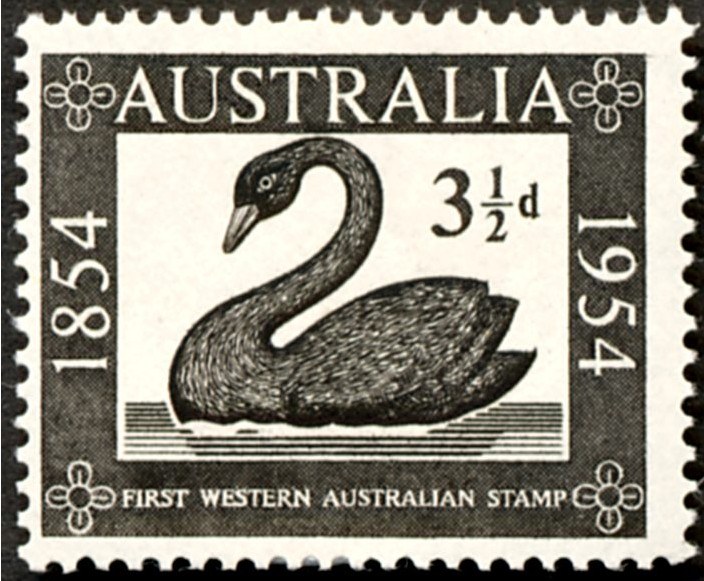
    In the 2nd century, a roman poet coined the term black swan describing an imaginary bird – since at that time, all known swans were white. That was until the 17th century, when Europeans landed in Australia, when they spotted a black swan.

    Nassim Nicholas Taleb tells this story in his book The Black Swan: The Impact of the Highly Improbable. Note, the book is not about birds, but how we struggle with things that shock us – outliers.

    I particularly loved the irony – these 17th century travellers declined to categorise that bird as a swan at all. In their mind, a swan had to be white.

    Moral of the story: be aware of how we categorise. And, when we encounter a new idea that cannot be boxed onto an existing bucket, it deserves a new category on its own.

    The Meditating Brain

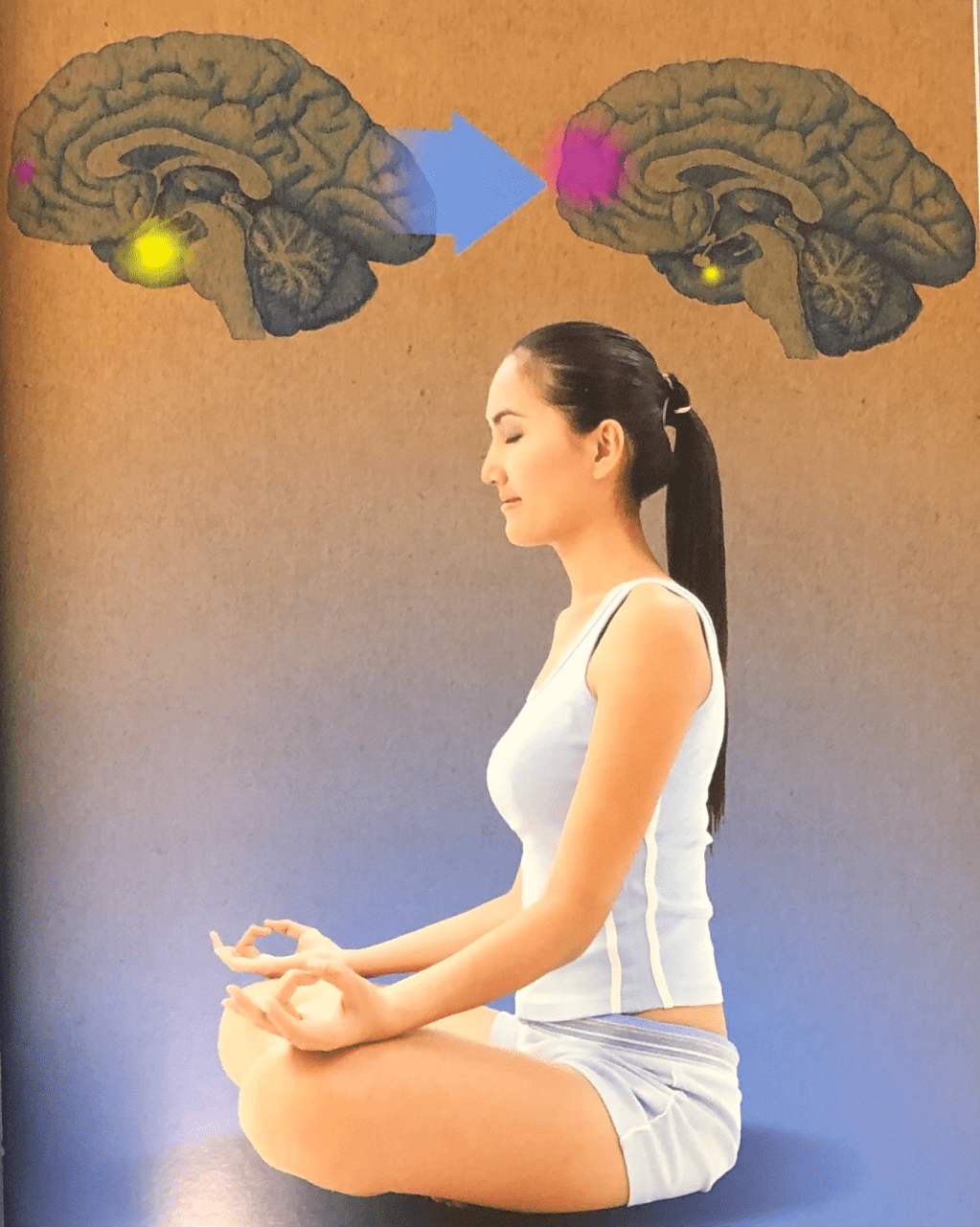
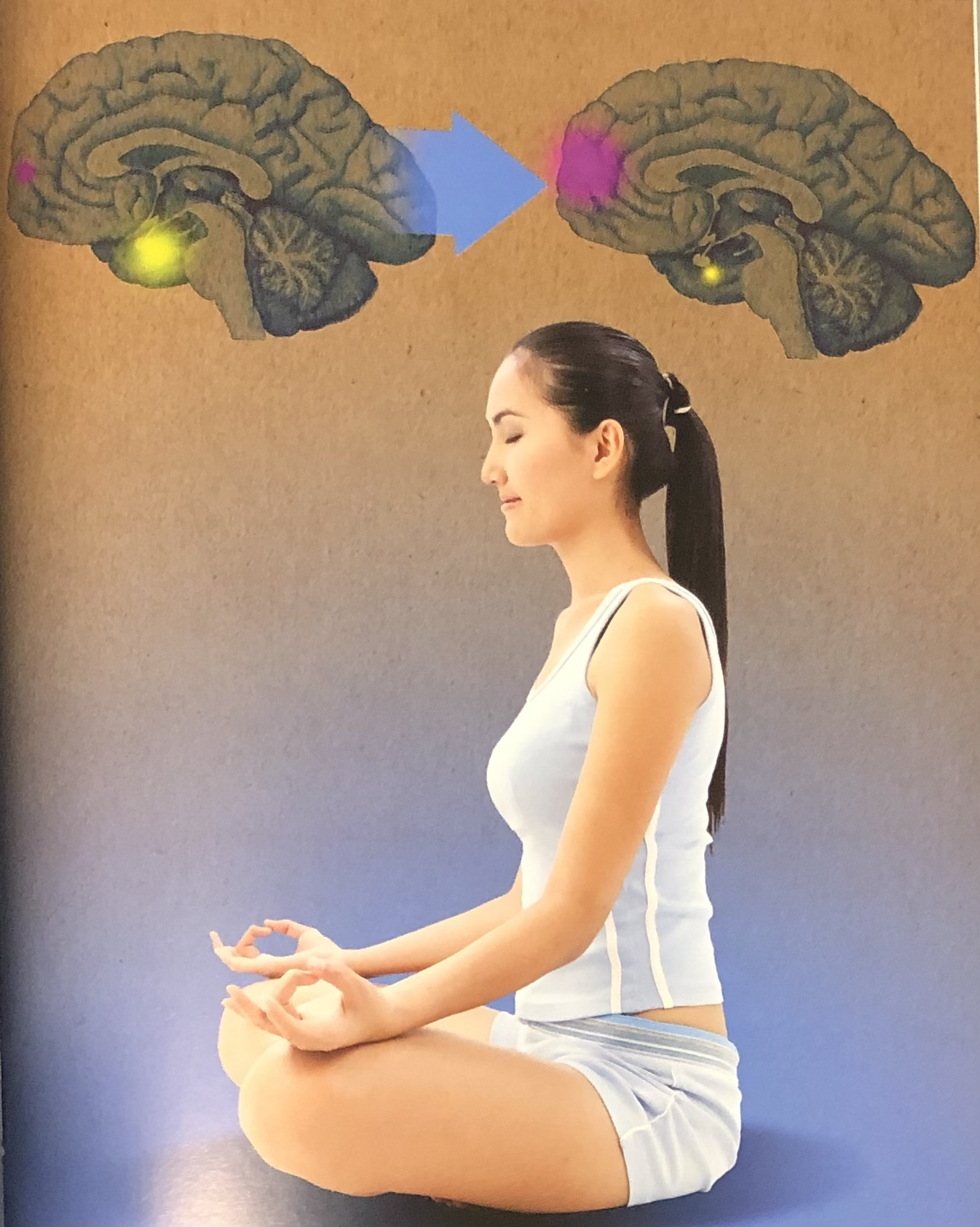
    I mentioned earlier, how prefrontal cortex helps with categorisation. The picture-book “30-Second Brain”, edited by British professor Anil Seth, illustrates how meditation rewires our brain.

    Just after 4 sessions of meditation, it is found that we use less of the primitive areas of the brain, activating the prefrontal cortext that helps us perform higher orders of cognitive functions and intelligence.

    Kiki or Bouba ?

    Did you associate the word kiki with the sharp edged object? You are like the 95% of participants of a famous experiment “Bouba/Kiki effect“.

    We cannot help ourselves especially when we don’t realise we are making these associations. Are we stupid, are we wrong? Should we stop categorisation altogether ?

    I finish with the simple and slightly modified words of a famous Henry Ford quote:

    Whether you think you should, or you think you should not – you are right.

    PS: This is the part 2 of a three-part blog post “How to Think Better”.

    Check out Part 1: “How to Think Better – Externalise”

    Part 3 to be written: “How to Think Better – Explore

  • New Map on an Old Wall

    Three weeks ago, the entire kitchen wall in our office was filled with maps of the world. Diversity and inclusion week was being celebrated. We were asked to highlight the place we were born, by pasting coloured stickers on the map. Australian continent is deemed down under, but we placed Australia at the centre of the world. I mean, the wall.

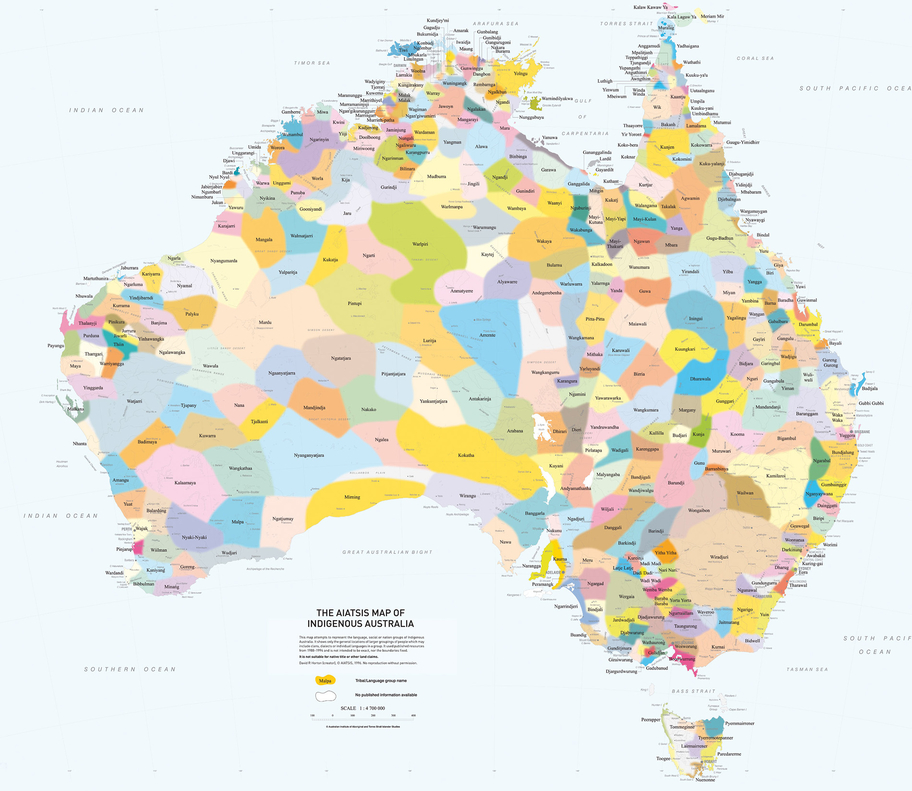
    Last week at office, I noticed a new map of Australia on the same wall. A different one, with blurred border lines separating a huge number of “states” and “territories”, all highlighted with various colours, with new names. New, to me – a recent immigrant.

    As a child, I loved colouring maps. I was fascinated by borders, routes and names. 

    “Where are the border lines?”

    I always wondered how the boundaries of states and nations were made. I don’t remember much, but I would ask, who drew those lines and how. During trips to a temple in the adjacent south Indian state, I might have pestered my dad or an elder cousin, “Did we cross the border already?”, “Where is the line that i saw on the map?” I wonder if they might have pointed at the river and the mountain ranges as the bus entered the border town. I never understood.

    Years later, the much grown up adult me would figure it out. Those borders on the map are not real. They are a socio-political construct. Nothing to do with geography.

    “Routes that create territories”

    In the past, the invaders and colonisers used maps to discover new territories. To then change the landscape, peoples, culture, everything. They say Map is not the territory. But those conquerors used maps to make new territory. Bruno Latour says, “The great man is a little man looking at a good map”.

    We trust a map so much these days that we are lost without it. We take it literally, or almost fatally, as this German driver did (from a story I read in an old copy of Readers Digest).

    The semi-conscious middle-aged man was being questioned at the hospital after his accident, “Why did you drive your car at high speed directly at the barricades. Didn’t you notice the exit was blocked for repair. That too, on a sunny day?” His reply, “I followed the GPS on my car”.

    Names: old – new – old

    The city I grew up – Coimbatore – is near the foothills of the beautiful hill station, Ooty. Its historical name is Uthagamandalam. The British made it their summer capital of the south. The name was a mouthful though. They tried pronouncing, but made a mess of it, naming Ootacamund. The locals might have resented it, even if they couldn’t have resisted that change. Eventually, it became Ooty

    Thirty years after the British left, the local government decided to change the name to its old Uthagamandalam. Still, a few locals resisted this change. But they might have figured:

    If the names could be changed then, 

    the names could be changed now.

    The new (old?) colourful Australian Map

    That map on the kitchen wall last week was to mark the National Reconciliation Week. The AIATSIS map is a “visual reminder of the richness and diversity of Aboriginal and Torres Strait Islander Australia. It was created in 1996 as part of the Encyclopaedia of Aboriginal Australia project and attempts to show language, social or nation groups”.

    Maps, with its borders, routes and names, decide the way we see the world. They don’t just tell us where we are, they determine who we are.

    Perhaps, we don’t stop with a new map on the old wall.

    We bring the old map back to the new minds.

    (This is from my speech delivered last week at our Toastmasters club on the theme of National Reconciliation Week in Australia, which is all about “relationships between the broader Australian community and Aboriginal and Torres Strait Islander peoples”. Please note, while I am still learning about this important topic, my attempt was to touch on the related topic of maps, through stories, anecdotes and insights.)

  • Blank

    Blank

    I couldn’t write a blog last month. I didn’t want to. I didn’t want to write one of those self-deprecating takes on a life experience and fill it with wise-cracks. I was struggling for ideas.

    I was actually struggling for words to describe the state of my mind.

    Situation in India

    Everyone seems impacted by COVID, not just counting the unfortunate ones invaded by the virus. The visuals on TV last month were striking – ailing men and women standing in long queues to secure hospital beds, oxygen cylinders or anti-virals. Haunting scenes of bodies that lay queued up in front of a crematorium. Social media, especially twitter was abuzz with cries for help, but in equal measure, with quick and life-saving responses from strangers. The state of my mind tasted like a cocktail of despair and hope. 

    Heavenly prison

    As I talked to my parents, friends, uncles, cousins, ex-colleagues, almost anyone from the land that birthed me, I tried to listen more, but found nothing helpful to offer. My wishful words sounded empty. I watched all this nervously from a safe distance, within the safe comforts of a western country that has a much lower population, a better system, and lucky. Also, cocky. Australia conveniently closed its borders and threatened – with a jail term and a ridiculous fine – anyone trying to come back to the country. The state of mind : angry and helpless.

    Help?

    I am one of the 18 million Indian diaspora spread around the world. What can one individual do, after all ? Of course, I try to support my immediate family and friends in any which way I can – mostly monetarily, given travel restrictions.

    What else could one offer, beyond money and empty words ? I saw Indian-origin doctors offering virtual services to ailing patients in India. I saw millionaires sending flights-full of useful materials. I read about corporates vaccinating their employees. I came across inspiring stories of nameless individuals helping out strangers in dire need.

    I realised then, my craft as a software engineer is not directly useful to my people at the moment. Or maybe i don’t know what to do with my skills – beyond earning a monthly salary.

    What can i do or make?

    Eventually, I joined a small group of the Indian community here in Canberra, who organised a South Indian vegetarian food fair in the temple, to collect funds for a hospital in Coimbatore. We all prepared idlis at home and sold it at the temple. A decent collection resulted that should be helpful. Well, something necessary if not sufficient. As I did my bit around the kitchen, I wondered if this was all I could do.

    The state of mind: feeling inadequate.

    Coping strategies

    Though my family is largely unscathed (fingers crossed), my parents are yet to be vaccinated. I fear we are sitting on a time bomb. Meanwhile, life goes on; work consumes my days, leaving the night wide open for dreadful anxiety. Often in the middle of the night I wake up to check whatasapp, hoping not to catch a text or a missed call.

    When no actions are possible, I turn to distractions. Movies, sports, trivial news in social media, celebrities, anything. And books, especially on philosophy.

    Kural and Senaca

    I turned to Thirukkural – the Tamil classic text from 300 BCE, written by an unknown author (we call him Thiruvalluvar) who has written 1330 non-religious yet sacred verses or Kurals (couplets), seven words each. These kurals are like morals and commandments covering three key aspects of life: virtue, wealth and love.

    There are 10 kurals that cover how to deal with sorrow and despair, each offering a unique coping strategy. A few explain the nature of sorrow and suggest being realistic. A couple of kurals advise us to defend against the incoming trouble. But, a few kurals insist fighting back: trouble the trouble to make it run away, or something of that sort. But this kural below has the best strategy of it all, and I remember being surprised when I first learnt it:

    இடுக்கண் வருங்கால் நகுக அதனை

    அடுத்தூர்வது அஃதொப்ப தில்.

    If troubles come, laugh; there is nothing like that, to press upon and drive away sorrow. (Translation, courtesy valaitamil.com)

    Laughter is indeed the best medicine. But, the state of my mind ? Not funny.

    The Stoic’s take

    In the end, I got a better medicine from the greek stoic philosopher, Seneca, who is now getting more popular after 2000 years.

    Light griefs do speak; while

    Sorrow’s tongue is bound.

    I figured, my mind was at a state where no words or thoughts could spring.

    Blank.

  • How to think better – Externalise

    How to think better – Externalise

    If I claim this blog will help you think better, you would wonder why is this guy talking about it. Even if you know me enough, the why part of the above question is valid.

    I am no neuroscientist, nor a philosopher. I don’t even think clearly under stress. I still occasionally lose my car keys, and spend an annoyingly long time to make simple decisions. Worse, I keep changing my mind. What credentials do I have to write about thinking?

    The only trophy I can flaunt is the collection of books in my home library, such as How to Think, The Art of Thinking Clearly, Thinking, Fast and Slow etc. 

    With so much thinking about thinking, when will i ever focus on “doing”, you might ask. Well, I want to share some life-hacks relating to thinking, that has worked for me.


    Particularly, I want to write about three ideas in a three-part blog series. This one is about externalising our thinking process.

    I will cover the last two ideas in subsequent blogs. Categorisation: to put various things you encounter in categories or buckets, and Exploration: to search for information and insights to make decisions. While none of these are my original ideas, I have begun applying some to good effect.

    Externalisation – one way to look at this is: offloading stuff from inside your brain, onto a physical format in the external world. Eg. writing, drawing, talking; in fact, expressing of any kind – singing, moving, whatever.

    Cognitive Load

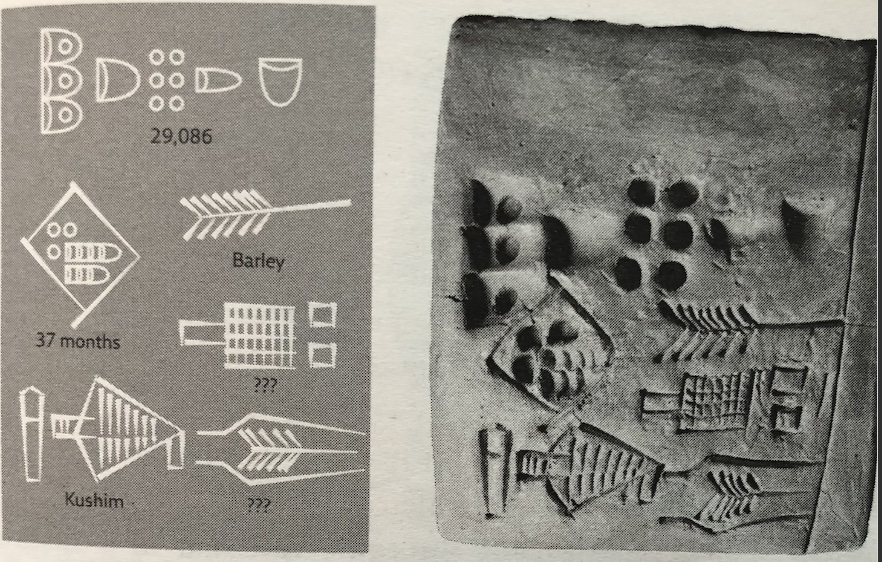
    In my early thirties I realised I could no longer remember phone numbers from memory, and began writing them down. I thought it was a sign of getting old, but it appears, writing as a way to store information is a method followed since ancient times. Yuval Noah Harari writes about this in the bestseller, SAPIENS – that our evolution as humans may have depended on writing skill – shedding the cognitive load from our brain. Not the other way around. The book illustrates the Sumerian writing system from 3000 BC, as a method of storing information through material signs.

    An interesting part of this story is about the first known “writer” in the world. Was he a poet, philosopher, story teller, king or a teacher? Nah. it was the boring accountant Kushim, the first recorded name of a human, ever. 

    I have written previously about how much of a game-changer it has been for me to write my thoughts, ideas and to-dos regularly. Sorry, I have harped on that enough – but please read along to get more convinced of why you should consider writing more.

    Extended Mind

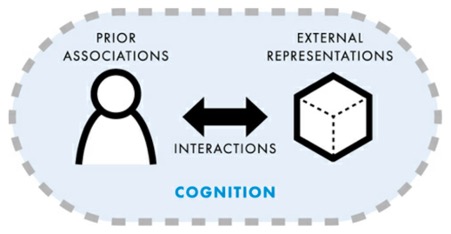
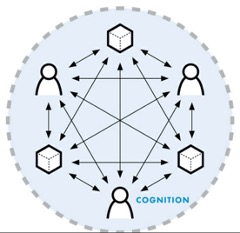
    This idea of externalisation is more than just shedding something from our brains. It is about expanding the zone where cognition occurs: from the brain itself, to all places external to it, onto our body and even further outside. Stephen Anderson, in his delightful book “Figure it Out: Getting from information to Understanding“, explains the recent advances in neuroscience via a simple illustration of the Extended Mind.

    When you have vague idea or a hunch about something, capture that instantly in a piece of paper, and look at it. Now, you have two things: your thought itself still lingering in your mind, and the external representation of that thought, staring at you as the text or drawing that you just created. This interaction in turn drives additional thoughts in your brain. Cognition powers through during such interactions.

    Think and express, or express in order to think? The important aspect about the capture of our stream of consciousness (often containing incomplete thoughts) in an external format, is this: it is not as if we think clearly, and then express it. Expressing a vague thought – writing, talking, drawing whatever – actually is part of thinking itself. 

    In his research thesis, written as a brilliant book “Articulating a Thought“, that has a striking cover page, Eli Alshanetsky throws this paradox: when we express (eg. write down) what we think, we might feel unsure as to what we just expressed fully covered what we thought; on the other hand, without writing (or externalising of any kind), we wouldn’t even know what our thoughts were in the first place! Nevertheless, as Eli explains, the act of expressing our thoughts using language helps, because, language prolongs the thought; it completes the thought; and it specifies the thought.

    Of all the known modes of expression, writing is found to be most energy-efficient way to express – and to preserve our thoughts. But it also happens to be the most difficult. George Orwell’s quote thus haunts us: “If people cannot write well, they cannot think well, and if they cannot think well, others will do their thinking for them.”

    I didn’t write this blog after thinking through everything i was going to say. Infact, the act of writing – putting down my thinking into words and forming sentences – shaped my thinking about this topic. And every time I “looked” at the written text, it refined my own understanding of my own understanding.

    In particular, writing using our hands, compared to say, typing, is proven to help our memory. In this paper, Kate Gladstone explains, handwriting is “far better at providing the necessary level of stimulation”, as it “activates a particular “network of cells within our brains: a “command center” called the Reticular Activating System (RAS)“, which is responsible for attention, alertness and motivation.”

    Outsourcing our thinking to others

    We are social animals. We express our thoughts and emotions with our partners, colleagues, friends and family. So, taking the idea of externalisation further, group thinking becomes very relevant when others are able to build on top of our thinking – as they express their interpretation of our ideas. This is more effective when we capture all of those thoughts and ideas from everyone in an externalised format that is visible to all (eg. writing in a white board).

    I am part of a sales team and thus i often rely on others – experts in various lines of business within my company. Often we brainstorm ideas and decide together how to deal with challenges. This insight that I am not alone, and that i can delegate parts of my thinking to a huge bunch of experts, has been both an exciting and humbling one. I say this when asked if I know about a particular product or a technology. “I know that, because either I actually know that thing, or at least I know someone who knows that.”

    Thanks to the internet, it has become super easy for us delegate this thinking to the whole world (eg. post a question in an online forum like quora, reditt or if you are braver, social media like twitter).

    Walking helps thinking

    I have often found that as i rake my brain to strategise, make decisions or look for new ideas, there is an irresistible urge in my body to jump out of my seat and walk. Walking is now an important part of my weekly activity. Especially after learning about the science on the correlation between walking and thinking. This Newyorker article explains well: article “Walking Helps Us Think”

    “When we choose a path through a city or forest, our brain must survey the surrounding environment, construct a mental map of the world, settle on a way forward, and translate that plan into a series of footsteps. Likewise, writing forces the brain to review its own landscape, plot a course through that mental terrain, and transcribe the resulting trail of thoughts by guiding the hands.” “Walking organizes the world around us…Writing organises our thoughts”

    I hope all this made sense. If not, please write back to me – I will really appreciate that. In the meantime, I will need more time to walk, think, and eventually write about the other two ideas as blogs.

    Getting lost…

    I have always been accused of an over-thinker and, in the recent years, I have been down many a rabbit hole: reading a lot about how to think better, thinking a lot about how to write well, and writing about all that comes to my mind.

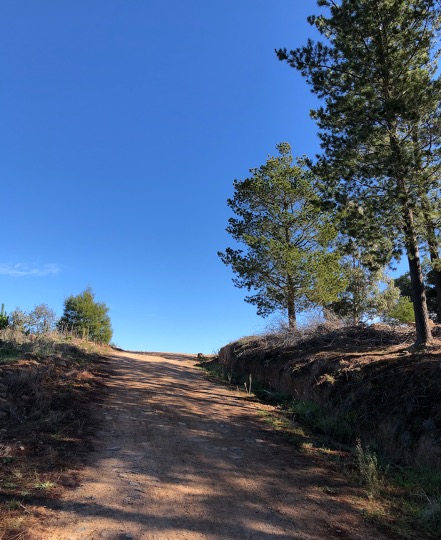
    I am actually not sure where this is going, but i enjoy getting lost in such thoughts. Last month, i went walking around the suburb on a newly laid trail into the woods along a beautiful water stream, while listening to a Tim Ferriss podcast. Thirty minutes later I found myself reaching on top of a small hill. I didn’t want to return home using the same path, and decided to try out a new route which turned out to be a dead-end – with barbwires and all that. Eventually, I had to use google-maps to get back home, which felt a bit embarrassing.

    This unexpected detour though, triggered a random idea which helped untangle a mess – that was until then an unexpressed vague thought that was eating my mind that weekend.

    Folks, get it out of your mind. It will set you free.

    PS: Check out part 2: how to Categorise, and part 3: how to Explore

  • Recapturing the Saturday 4pm zone

    If there was an election to choose the best time of the week, my vote is for Saturday. Particularly, i will tick the box : 4pm Saturday afternoon.

    There is competition. Sunday is popular and highly rated. It prides itself as the first day of the week, and a holiday. It is precious – and that, paradoxically, is its downside. The pressure to do something relaxing, while being constantly reminded of the slippage of time, that drags us towards yet another week that is still to be planned.

    Monday stands no chance whatsoever – infamous for its morning blues. Historically, it hasn’t proven to get better during the day, as one bears the brunt of many mails, calls, actions and the sudden realisation: should have worked during the weekend to catch up.

    Tuesday is the day people wake up to the reality of the week. So, it won’t win as there is no time for frivolous elections.

    Some of us are mentally dead by the time we scrape through Wednesday. It is nevertheless a decent contender for the vote, as I have noticed a lot of people pre-maturely celebrating its evening as the beginning-of-the-end-of-the-week.

    Thursday is usually a serious day, when the managers chase their teams to see what could be salvaged for the week. The last chance to “begin” something, as it would take at least two days to do an acceptably shoddy job of what was originally estimated to be a week’s effort. As the philosopher of our times Alain de Botton says, “Work finally begins when the fear of doing nothing exceeds the fear of doing it badly.”

    Friday is like a celebrity who simply expects everyone to vote for her, being famous for the TGIF theme (Thank God its Friday!). She doesn’t realise the truth: people don’t really thank God for giving them a Friday; they are just relieved that the week is soon over.

    What is special about a Saturday? At one end, we have the morning, which begins with a “hangover” of the arduous week – the unfinished business still lingering – followed by weekend chores and errands. Saturday nights at the other end, have a special significance in the popular culture – a time set aside for entertainment, a chance to catch up with friends. All of this require planning, scheduling, coordination. Effort. But there is something about an undemanding, effortless Saturday afternoon.

    Illustration by Sowmya Ramanathan

    It is that period, when it would be too late to finish anything pending for the current week, but too early to worry about the upcoming week. A golden, yet fuzzy time space that overlaps the boundary between the weeks. A land without rules, ruler or expectations. A zone to indulge on a meaningless pursuit where no one keeps track of your time. No one cares.

    I have cherished the memories of many such blissful Saturday afternoons of my childhood days (late 80’s). Life was simple. Less TV, no social media, and there was such a thing called boredom. A scene from a typical Saturday 4pm: My mother eager to prepare the perfect afternoon snack, enthused by her weekend wish coming true – being taken out for shopping earlier in the day. My younger sister quarrelling with me over trivial things. Me being physically outmanoeuvred by her yet again; we end up disrupting my dad from his well-earned nap after a gruelling work-week. The unimpressed grandma admonishing us for making a fuss. All of that brought to a peaceful end by the spattering sound of the spicy bajji and the smell of filter coffee. The nourishment for not just the body.

    Growing up, the sweet Saturday afternoon zone got shrinking. Weekend homework increased, priorities changed, we all got busy. Still, those afternoons were a medicine, a recharger of sorts, where time stood still for a brief while, preparing us for the countless weeks ahead. It was all about leisure, less focus on doing anything specific and more about just being together, often spent talking about a random, point-less matter that appears meaningful when I look back.

    2020 was a tough year on many respects. Nevertheless, it was a blessing in disguise. After many years, i sense to have re-acquired this “zone”. The recent year-end break was a great time for me, my wife and our daughter to do what the younger-me did with my family during those Saturday afternoons: be together and do nothing in particular.

    I did something after all. Picked up a few of the books that were staring at me for a while. One in particular blends with this Saturday 4pm mood. Work: A History of How We Spend Our Time, by James Suzman is all about how we humans have completely misunderstood what Work means, missing out on what our (hunter-gatherer) ancestors had an abundance of: Leisure.

    Stepping into 2021, i promised myself to dwell more often on this Saturday 4pm zone that i voted for.

    What is your vote ?

  • Press Any Key to Continue…

    Press Any Key to Continue…

    My boss put two questions in front of me recently, during the half-yearly review meeting. “What is the aspect of the job that gives you joy” – a nice, ego-boosting leading question that lead to a delightful conversation.

    Her next question stumped me: “What is going to be your pet-project?”. “The one activity you could do on your own, during free time. Something you could come home to, when you have had an especially bad day”.

    I drew a blank.

    Homecoming

    This question is significant today, as we perceive time, work and life very differently than just a few months ago. During the pre-COVID era(?), a knowledge worker like me would have separated work and life – at least physically, straddling across office and home each day. We used to talk about work-life balance. These days, there is not much of a discussion about balance. It’s all a blur at the moment.

    A good blur, at least for me. I no longer need to get up worrying about ironing the shirt or to drive to work to be in time for the first meeting of the day. Time is aplenty. (My wife isn’t too excited though – having to come home each day only to see unwashed stained tea cups – one on the table, two lying on the floor and one missing).

    Sorry, I digress. The point is, a different sort of homecoming is necessary to keep our sanity.

    But, a pet-project ? You see, this phrase has two words that sound dangerous to the lazy-me: a pet needs maintenance, while a project needs diligent work towards completion.

    Spend, Manage or Invest ?

    On a serious note, what would i do with a bit of extra time ? Time = Money, they say. There was this crude poster i saw recently that compared how the poor, middle-class and rich deal with money:

    – the ones who have less, SPEND.

    – the ones who have moderate amount, MANAGE.

    – the ones who have excess, INVEST.

    How do i invest this little excess time? Typically i am bored, i look for interesting things in twitter (will write a blog one day, about the gems i discovered by following a few interesting people in twitter during this year), read a bit of philosophy/self-help books, watch movies (these days i’m into Turkish rom-coms). I also play a bit of amateur sports. However, i’m not serious about any of these things. I dabble.

    Making Choices

    To be serious about a pet-project, i have to generate a list of options, make a choice, invest time and energy, report on its progress, and show some result.

    Choice! If i have a, b, c, and d as choices, it is mainly a question of what appeals to me the most. What if there is something outside this list that suits me better? How do i know what i don’t know ?

    One would argue, it is not easy to make decisions even with clearly defined, discrete choices. The red or the blue pill, as Morpheus asks Neo in The Matrix.

    When my daughter and my nephew were toddlers, they used to fight for the best toy. Once, faced with a red and a green plastic trumpet, the kids couldn’t come to an agreement who gets what. It ended like this: my girl grabbed both the trumpets and offered the guy to choose one of those. As soon as he decided on the green one, she knew exactly what she liked. She snatched that very green trumpet from the hands of the baffled boy, and threw the red one to him.

    What to look for ?

    Life is easier as a child. I am more indecisive than ever before and struggling to answer a simple question, with no clear list of options, nor a play-mate to try out a decision tree.

    Perhaps this question should be framed as: what would you “work” on, given unlimited time & resources without any constraint whatsoever?

    I looked around for some quick inspiration – maybe mentors could help? Or the so-called thought leaders – like Paul Graham – who says in his blog, What Doesn’t Seem Like Work, “The stranger your tastes seem to other people, the stronger evidence they probably are of what you should do.” He ends by asking, “What seems like work to other people that doesn’t seem like work to you?”

    Unbounded and Unflattened

    When i look back at my life so far, someone or something has always driven me somewhere. A rank to achieve, a course to finish, a job to get, a project to complete, a step to climb in the corporate ladder, a problem to solve for a customer, etc. Even when i indulged in creative pursuits, there had always been constraints or a boundary.

    I am not sure how to wrest myself out of the set path – even if it is just for a hobby. Something different and random but not trivial; a pursuit that delivers pleasure but no expectation (i certainly don’t want additional responsibility and having to justify to anyone – including my nice and well-meaning manager, who surely will be reading this blog with a chuckle).

    Anything, that amounts to something in the end.

    Anything

    This reminded me of a story about Compaq computers: In the 1980s, their customer support team had to spend a lot of time explaining first-time computer users, who called up to ask “Where is the Any key in my keyboard?”. The users were confused by the message in the computer monitor that instructed them to “Press Any Key to Continue”.

    Where is my “any” key ?

  • Checkmate, Stress!

    Remember that weird state of your mind when you woke up many years ago, totally unprepared for a test? Or while suffering through an impossible and never-ending project that had a huge bearing on your career. And what Federer might have dealt with as he was clutching at straws facing a seventh match point at the Australian Open last month (you might say, his wife Mirka was more at pain, with her hands clasped and eyes closed in a quiet prayer).

    Stress is a bad word. It is so vague, it means everything and nothing at the same time. Im no expert in psychology and have no intention to write a “how to beat stress” blog. I thought of narrating a few personal insights and a lot of borrowed learnings that helped me deal with this beast.

    When i picked up Mind Master – Winning Lessons from a Champion’s Life, i expected World Chess champion Viswanathan Anand’s book to contain sophisticated mental strategies for career growth. The now fifty year old master was once a child prodigy. I am only half way though the fascinating book, but Anand opens up like a friendly mentor. He portrays his vulnerable self when facing a daunting opponent like Gary Kasparov and appears an emotional wreck after a jolting defeat. Beyond his insights on risk taking, persevering towards goals, contextual memory and developing curiosity, i loved the emotional human behind the intellectual genius.

    There are solid lessons from the seemingly quirky, nail-biting warrior’s many duels – most, against his own mind.

    Dealing with Emotions and being fearless

    He talks about how emotions come in the way of clear thinking and decision making. Especially, “After a defeat, it pays to completely change my surroundings, find something new and compelling”. “The mind only recovers emotionally when it can replace an old memory with a new, more pleasant one.”

    He then narrates how different Kasparov was in dealing with a similar situation. The all time great champion was struggling one day in 1987 during his match against Karpov. “Instead of striking his head against the washboard over his predicament, Kasparov spent the entire night playing cards”. The next day, he woke up late, had a lazy lunch and told himself he was just going to keep going.

    As i read this, i got reminded of a similar story narrated by the Sri Lankan cricket captain Arjuna Ranatunga, about his team’s state of mind on the eve of the 1996 world cup finals against the mighty Australians. His team were the underdogs but had played a fearless brand of cricket all through the tournament. Staying in the same hotel in Lahore along with their opponents, he noticed the Australian team having a quiet dinner, while his troops were no were to be seen. When he later found many of them shopping carpets and sarees for their wives, he comforted himself, the cup was theirs: A team so relaxed, cannot lose. And they didn’t.

    Around a year before this match, i was faced with an anxiety attack on the eve of my year 12 chemistry exam. I was hoping to refresh my memory of all things chemistry during the two day break after the physics test. I had to get close to 200/200 in each of physics, chemistry and maths, to have any chance to getting into the tier-1 engineering college in South India.

    I had toiled the whole year on physics, but i messed up a twelve-marks question. Returning home, i felt defeated even as my dad tried to calm me down. The two days before the chemistry test felt like eternity. After spending forty of the forty eight hours self-loathing, fretting and fuming, the fear of failure made me hopeless. But with just a night to pass before the test, i suddenly felt better since i had lost already. I told myself, “I won’t get into the university i yearned for. Let me just have some fun”. I still remember, i was one of the very few who had a smile in the face before, during and after that three hour test.

    Viswanathan Anand too explains how his occasional shift in attitude – embracing fearlessness – landed him spectacular victories. “i have played my most inspired games when my enthusiasm for the sport resurfaced, without the bindings of titles or wins or ratings”…”to play a good game”..”excited about learning something new”.

    My battle was no way comparable to his. Still, when the results came two months after my exams, i shocked myself and my chemistry teacher, scoring a perfect 200/200 – a tough feat at that time, especially in my school.

    From Checkmating to Note taking

    Anand’s suggestion in taking notes as a means to deal with emotions and stress is another revelation. “putting down my observations right after a defeat when the pain was raw and the sting was fresh, I stumbled upon the solutions I had seen but didn’t act upon or the ones I had overlooked.”

    I am no big achiever yet, but i can vouch for this. For the last couple of years, i have been diligently writing down notes in a daily (sometimes, hourly) journal. I make a note of what’s in my mind, what i’m thinking, more importantly, the raw emotion at that moment – feeling fearful, inadequate, blessed, clueless, bored etc.

    Poring over these notes – a treasure trove – i have become a lot more objective, grounded and relaxed. (many of my blogs were born out of those).

    As Anand says about his 40+ years of notes, “without that”…”my experience [is] almost incomplete.”

    Second Brain

    A zillion things go on in our mind at any moment. Offloading much of that – thoughts, ideas, shopping lists, pending tasks – to another system is a stress buster. For the uninitiated, David Allen’s book/methodology Getting things Done is a great place to start. Along the way, i discovered, Tiago Forte’s Building the Second Brain (BASB) techniques quite useful. If you are looking for a contemporary note taking app/tool, i suggest Roam Research – this has been a game changer for me.

    Don’ts

    A few physical techniques like simple exercises, breathing techniques etc, can be transformative no doubt (eg. Paul Taylor’s Mind Body Performance Institute), and i’m not even venturing into the possibilities in the spiritual realm.

    For me, confronting the raw emotion face to face has been an effective way to conquer it.

    One thing i learnt not to do when your loved ones are feeling it, is to suggest, “please don’t be stressed”.

    It is as useless as saying, “please don’t have a headache”.

  • The Karate Lies

    “Say two statements to describe yourself: a truth and a lie. Let the team guess the right one”. A silly but surprisingly effective way to spend a quarter of an hour of an otherwise boring day of sales planning sessions. It was also a chance to get a new perspective about colleagues that we assume to know well. Everyone tried to be clever; a few stated one attribute about themselves super quick while hesitating or scratching the head for the next, which gave them away.

    At my turn, I claimed two achievements: 1) represented my college Tennis team 2) hold brown belt in Karate.

    No one was right about me. Having to assess the lazy, lean, slouching and unimposing fellow, they all could be forgiven for not associating me with martial arts.

    What was your guess ?

    Now, I don’t remember any of the karate stances or techniques, and I for sure cannot punch without hurting myself.

    My father introduced the 8 year old me to karate. He just didn’t enrol me to a class; he would talk to the karate master frequently; watch me train, as he sat on the side-lines. He would attend every belt ceremony. While he encouraged me to be physically fit – he had built up a few muscles himself – i was a lazy kid looking for excuses. I did well academically and insisted holding a book rather than dumbbells and plates (he had custom-built for me). If only I had 10% of his passion.

    Still, I kept up with the karate lessons for the next few years. Getting up at 5:30 am thrice a week, cycling through the dark alleys to the next suburb, I would meet ten more of my sleepish class mates and our no-nonsense karate master smiling at us. He insisted on warming up – made us do knuckle push ups on a hard, sand surface. The actual karate stances (katas) will be taught much later. He emphasised learning discipline, mind control and self-defence, before acquiring skills to flex, punch and kick. “Be alert, block and defend. You will do just fine”.

    Occasionally, he will organise sparring – fighting an opponent – and I would be the worst of the class. I did well on theory and trembled on a real combat. I survived quite a lot of those sparrings by employing my defence techniques (A little bruise here and there wouldn’t count).

    I once had to face-off against a friend – a bulkier boy who happened to be my mother’s colleague’s son. After the fight, as we both walked back home, my mother spotted a bulge on his lips and wondered if he had hit his face against a wall or something (she obviously ruled out the possibility of me ever hitting another human being). “It was a punch”, was my friend’s reply, a clever usage of passive voice. My mother appeared confused as she took that word for a similar-sounding Tamil term “panju” (cotton). I then narrated to her: As he began attacking, I got nervous, crossed my hands and closed my eyes. Perhaps he lost balance and tripped. His face fell onto my hands, landing his tender lips on my tight fist.

    My next “fight” was a real one. During my year 6, a close friend Velan changed character, began teasing and bullying me as he joined a new bunch of mates. He was tiny but challenged me for a real man-to-man fight that evening. I was half thrilled and embarrassed to face-off against my own friend. I was scared too. After school, walking up to the soccer goal post, we looked at each other taking positions. By then, a crowd had formed to witness the spectacle of two bony structures about to create collateral damage.

    Velan punched. I moved my limbs in the air, more on impulse. Next thing I noticed, everyone running towards a crying Velan who had blood on his face. I cried much louder – maybe due to the impending loss of friendship, and also the tasty paruppu vada (fritters) his mom serves.

    These minor victories were exceptions on an otherwise vulnerable bunch of early-teen years. Feeling physically weak/inferior was part of growing up, especially being amongst intimidating (and bullying) class mates. Karate didn’t help achieve any level playing field with them – I stopped mentioning, to avoid being a laughing stock. Even during the many friendly encounters with my younger sister, I remember being easily out-manoeuvred. She never did any karate and had no fear.

    Meanwhile, I quickly progressed from white, to an orange and a green, then blue, a purple and eventually the brown belt. More self-doubt crept in. I looked myself in the mirror, imagining how it would feel to be ridiculed by one and all if I donned a black belt. While dad insisted to keep going, an unfortunate leg injury from a slightly-more-than-minor accident made me miss some classes. That was the excuse I needed to quit, and I never went back to the karate class.

    My father was quite disappointed. My karate master too caught up with me once during a neighbourhood event. I evaded all their attempts and buried my face in books.

    As I kept focussing on my studies and then, career, I have forgotten the karate kid in me. While my friends pumped iron, ran miles and bent their bones in yoga postures, I didn’t bother to move a muscle. I hit rock-bottom during my early twenties. Once with a group of us – boys (men?) teasing each other, I made a fool of myself announcing my brown belt credentials. One of the guys asked me to show if I had still got it – offering to receive my kicks on his body. The more I pushed and slapped with my slender legs, the louder he broke down laughing, as if he was being tickled. Worse, he was the thinnest of us all.

    I did win the truth/lie test at office the other day, but it will certainly be a lie if I claim any karate accomplishment. After all, when confronted, I have had more more losses, hardly any wins and occasional draws.

    As I calm down, I do realise that the real truth is somewhere in between. Karate was not all a losing cause.

    A few years ago, I caught myself in a road rage incident in Bangalore. My car hit an auto-rickshaw while I took a narrow turn, and it was all my fault. With my wife and kid in the rear seat, I got nervous as the thug-like driver ran towards me, signalling at me to lower the window panes. He hurled a few expletives and began to throw punches at my face. Six or seven hits, if I remember correct. My heart was racing, the girls were screaming, but I noticed him getting frustrated.

    All his hits were misses. Turns out, my forearms crossed up and blocked each one of those. My karate master must have been proud.