Category: writing

  • Tapping on the Floor

    Writing post-lunch, I feel the gravy drowning my gut. I am ready to write soundy words from gleeful images in my mind. The laptop is not on my lap. The monitor trembles as I punch keys. No, my fingers dance around the keys like a 80s pop star, hopping between colourful buttons on a bright floor. My fingers dance on the key floor from years and years of typewriting practice. I remember showing off at university, how good I was, how fast I was, how accurate my typing was – only to be admonished by the fellow computer-lab’ians : stop banging the keyboard. Its not a typewriter for godsake.

    It wasn’t a typewriter. I looked at the blue screen of the booby CRT as I punched a key. It blinked a hazy yellow font back at me. It taught me learnt a lesson. Typing on a computer is not to make it repeat what you say. It is to make it think about what you say. How to make the computer think? Well, that was the day I took baby steps towards programming.

  • A Word To Begin

    Who said you can’t focus after a heavy meal. My eyes roll in slow motion, the hip collapses into the sofa, while a mild breeze from the river below hits my cheek with a gentle praise, my fingers grip a dancing pen whose wild strokes fill the void of my story with a voiceless word.

    I begin.

    This is what my writing has come to. I scratch and stutter and stumble and suffer. I find it easier to stay admiring the bubble inside this fancy pen I hold. It resembles a mini fish tank, with pebbles and fluff but no fish. The dancing bubble at the top stares back. As I shake and scribble, the whole galaxy is stirred, many little planets move around.

    I play God.

  • How to think better – Externalise

    How to think better – Externalise

    If I claim this blog will help you think better, you would wonder why is this guy talking about it. Even if you know me enough, the why part of the above question is valid.

    I am no neuroscientist, nor a philosopher. I don’t even think clearly under stress. I still occasionally lose my car keys, and spend an annoyingly long time to make simple decisions. Worse, I keep changing my mind. What credentials do I have to write about thinking?

    The only trophy I can flaunt is the collection of books in my home library, such as How to Think, The Art of Thinking Clearly, Thinking, Fast and Slow etc. 

    With so much thinking about thinking, when will i ever focus on “doing”, you might ask. Well, I want to share some life-hacks relating to thinking, that has worked for me.


    Particularly, I want to write about three ideas in a three-part blog series. This one is about externalising our thinking process.

    I will cover the last two ideas in subsequent blogs. Categorisation: to put various things you encounter in categories or buckets, and Exploration: to search for information and insights to make decisions. While none of these are my original ideas, I have begun applying some to good effect.

    Externalisation – one way to look at this is: offloading stuff from inside your brain, onto a physical format in the external world. Eg. writing, drawing, talking; in fact, expressing of any kind – singing, moving, whatever.

    Cognitive Load

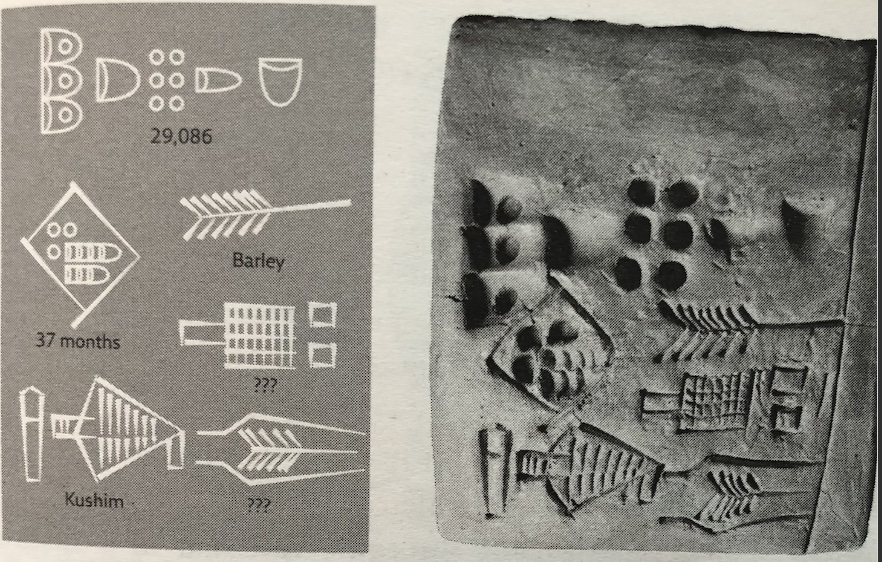
    In my early thirties I realised I could no longer remember phone numbers from memory, and began writing them down. I thought it was a sign of getting old, but it appears, writing as a way to store information is a method followed since ancient times. Yuval Noah Harari writes about this in the bestseller, SAPIENS – that our evolution as humans may have depended on writing skill – shedding the cognitive load from our brain. Not the other way around. The book illustrates the Sumerian writing system from 3000 BC, as a method of storing information through material signs.

    An interesting part of this story is about the first known “writer” in the world. Was he a poet, philosopher, story teller, king or a teacher? Nah. it was the boring accountant Kushim, the first recorded name of a human, ever. 

    I have written previously about how much of a game-changer it has been for me to write my thoughts, ideas and to-dos regularly. Sorry, I have harped on that enough – but please read along to get more convinced of why you should consider writing more.

    Extended Mind

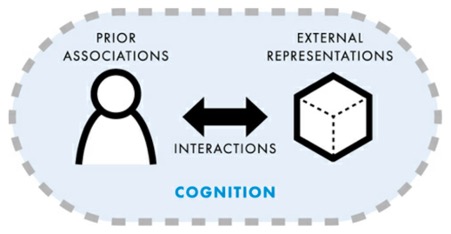
    This idea of externalisation is more than just shedding something from our brains. It is about expanding the zone where cognition occurs: from the brain itself, to all places external to it, onto our body and even further outside. Stephen Anderson, in his delightful book “Figure it Out: Getting from information to Understanding“, explains the recent advances in neuroscience via a simple illustration of the Extended Mind.

    When you have vague idea or a hunch about something, capture that instantly in a piece of paper, and look at it. Now, you have two things: your thought itself still lingering in your mind, and the external representation of that thought, staring at you as the text or drawing that you just created. This interaction in turn drives additional thoughts in your brain. Cognition powers through during such interactions.

    Think and express, or express in order to think? The important aspect about the capture of our stream of consciousness (often containing incomplete thoughts) in an external format, is this: it is not as if we think clearly, and then express it. Expressing a vague thought – writing, talking, drawing whatever – actually is part of thinking itself. 

    In his research thesis, written as a brilliant book “Articulating a Thought“, that has a striking cover page, Eli Alshanetsky throws this paradox: when we express (eg. write down) what we think, we might feel unsure as to what we just expressed fully covered what we thought; on the other hand, without writing (or externalising of any kind), we wouldn’t even know what our thoughts were in the first place! Nevertheless, as Eli explains, the act of expressing our thoughts using language helps, because, language prolongs the thought; it completes the thought; and it specifies the thought.

    Of all the known modes of expression, writing is found to be most energy-efficient way to express – and to preserve our thoughts. But it also happens to be the most difficult. George Orwell’s quote thus haunts us: “If people cannot write well, they cannot think well, and if they cannot think well, others will do their thinking for them.”

    I didn’t write this blog after thinking through everything i was going to say. Infact, the act of writing – putting down my thinking into words and forming sentences – shaped my thinking about this topic. And every time I “looked” at the written text, it refined my own understanding of my own understanding.

    In particular, writing using our hands, compared to say, typing, is proven to help our memory. In this paper, Kate Gladstone explains, handwriting is “far better at providing the necessary level of stimulation”, as it “activates a particular “network of cells within our brains: a “command center” called the Reticular Activating System (RAS)“, which is responsible for attention, alertness and motivation.”

    Outsourcing our thinking to others

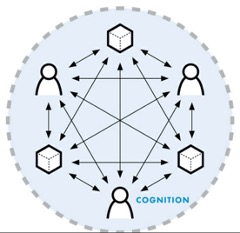
    We are social animals. We express our thoughts and emotions with our partners, colleagues, friends and family. So, taking the idea of externalisation further, group thinking becomes very relevant when others are able to build on top of our thinking – as they express their interpretation of our ideas. This is more effective when we capture all of those thoughts and ideas from everyone in an externalised format that is visible to all (eg. writing in a white board).

    I am part of a sales team and thus i often rely on others – experts in various lines of business within my company. Often we brainstorm ideas and decide together how to deal with challenges. This insight that I am not alone, and that i can delegate parts of my thinking to a huge bunch of experts, has been both an exciting and humbling one. I say this when asked if I know about a particular product or a technology. “I know that, because either I actually know that thing, or at least I know someone who knows that.”

    Thanks to the internet, it has become super easy for us delegate this thinking to the whole world (eg. post a question in an online forum like quora, reditt or if you are braver, social media like twitter).

    Walking helps thinking

    I have often found that as i rake my brain to strategise, make decisions or look for new ideas, there is an irresistible urge in my body to jump out of my seat and walk. Walking is now an important part of my weekly activity. Especially after learning about the science on the correlation between walking and thinking. This Newyorker article explains well: article “Walking Helps Us Think”

    “When we choose a path through a city or forest, our brain must survey the surrounding environment, construct a mental map of the world, settle on a way forward, and translate that plan into a series of footsteps. Likewise, writing forces the brain to review its own landscape, plot a course through that mental terrain, and transcribe the resulting trail of thoughts by guiding the hands.” “Walking organizes the world around us…Writing organises our thoughts”

    I hope all this made sense. If not, please write back to me – I will really appreciate that. In the meantime, I will need more time to walk, think, and eventually write about the other two ideas as blogs.

    Getting lost…

    I have always been accused of an over-thinker and, in the recent years, I have been down many a rabbit hole: reading a lot about how to think better, thinking a lot about how to write well, and writing about all that comes to my mind.

    I am actually not sure where this is going, but i enjoy getting lost in such thoughts. Last month, i went walking around the suburb on a newly laid trail into the woods along a beautiful water stream, while listening to a Tim Ferriss podcast. Thirty minutes later I found myself reaching on top of a small hill. I didn’t want to return home using the same path, and decided to try out a new route which turned out to be a dead-end – with barbwires and all that. Eventually, I had to use google-maps to get back home, which felt a bit embarrassing.

    This unexpected detour though, triggered a random idea which helped untangle a mess – that was until then an unexpressed vague thought that was eating my mind that weekend.

    Folks, get it out of your mind. It will set you free.

    PS: Check out part 2: how to Categorise, and part 3: how to Explore

  • An Original Copy

    “Can you prepare a document in two weeks’ time that maps our product offerings to the customer’s context?”. I didn’t understand why I was excited at this ask from the senior colleague. You see, in the past few years, I had been more assisting others to produce content – be it a solution proposal or a commercial document – as opposed to creating something on my own. Recent changes in the team meant I do a different role – one that requires me to prepare a collateral of innovation ideas, sales plays, case studies and customer stories.

    A week later, the excitement turned into a bit of nervousness. Up early on that weekend, I was coming to terms with the reality: I actually don’t know anything about this customer. Equally bad, I am out touch with recent innovations and product offerings. The feeling soon turned into anxiety, as I realised I have just a week to go and I hadn’t gathered certain details about this customer that I had expected to receive from a colleague.

    You can now imagine why I didn’t publish any blogs recently.

    Finishing a cup of coffee at 5:30 am, a moment of serendipity ensued. I gazed around the bookshelf and spotted my project report from the post-graduation days. Bayesian Theory based Troubleshooting Tree. We didn’t call it Machine Learning back then. “I did create a lot of content back then”. Rewinding further to the under graduate days, the mind wandered around the times of second year engineering, particularly of those anxious days before the Computer Programming exam.

    “Help me with Math and I teach you Computer Science”, a great deal offered by my class mate who was a computer nerd but (surprisingly) dreaded the mathematical elements of the Electro Magnetic Radiation course. He had some past experience in writing code, while here I was, having never touched a keyboard. I had to deal with this upcoming test on C, C++ and FORTRAN, while still confused by some basics of programming. For instance, I never got the difference between an “IF” and a “FOR” construct.

    I duly followed my part of the deal. We spent couple of weekends before the exam working out many mathematical equations and more importantly, some techniques in constructing answers to impress, and pass, of course. He was elated.

    When it was his turn to help me survive the programming test, however, he acted weird. Suddenly his PC went kaput. The subsequent weekend, his mom gave him an errand. Or he fell sick. I was left with facing a prospect of failing an exam for the first time in my life. I realised my class mate had ditched me. Prayers didn’t help either.

    On the day of the exam, seated on the front row of the bus to college, I still had an hour to do something. My neighbour was next to me – who was not (yet) a friend but one who went to the same college – and was busy going over a rugged old book on computer programming. I wondered out loud, how learning a different programming language (BASIC, if you remember) will help him write exam on C language. He then lectured me on how programming is all about logic, common sense and algorithms, and that syntax is just a means to an end while semantics is all that was important. As the time was ticking by, he shared some techniques like drawing boxes and arrows to construct a flowchart, and alerted me to write English sentences in a pseudocode before writing complicated coding statements in C++.

    All those things my bus friend taught me ended up saving my soul that day. I just had to translate what he said to the questions. I took quite a bit of creative liberties in answering that day. I wrote and wrote; didn’t finish until the last bell rang at 3 hours and 1 minute.

    How do I do it again, 25 years later for a different test ? A second bout of caffeine infused a bit of hope. I told myself, i can prepare that document, if I just stick to those exact techniques from those college days.

    I perhaps need more reminiscing from the past.

    I remembered how I made my own version of subject notes, in those days before internet and google: by corralling content from the original Russian author who wrote complex stuff about electron devices, simplify the language and complement by adding notes borrowed from those always-diligent-girls in the first row of our class. And splattering the boring textual content with mathematical equations, electronic network diagrams and name-dropping of jargons here and there.

    I also recall how a few class mates who had never interacted with me otherwise, would come up and say thanks. Little did I know that copies of my notes had reached far off places.

    This wandering trip to the past was just the kick I needed to get started with the document. During the next three hours, I googled and found many interesting details about this customer and their goals, strategies and what not. I also searched for content from internal corporate sites. Eventually I came up with a decent package. It was much easier than I had thought. The moment I realised I was creating something that does not exist, I began feeling lighter. And like those engineering subject papers, I ended up producing a comprehensive document that I felt proud of: an appealing construct of words, images, ideas and proposals.

    In the end, the deliverable was reasonably well received. While I still have apprehensions whether this is going to be greatly useful, it did serve a purpose: to make a start, a pitch and create something original, if I dare say that word.

    Because, it is quite controversial these days to claim anything original. We are inundated with content created by millions of people past and present. The fonts, colours, words, ideas and possibilities – are all out there. You just need to make a new sentence. Create a new perspective by mixing up things. There are several techniques in Lateral Thinking and Design Thinking that justify, or even encourage this copying – or building upon ideas from others.

    I sense what makes your copy original is the context that you bake in. Its a paradox, we all have our own signatures in our stories, creations – whether they are mails, documents, presentations, talks, even texts.

    Remember, you are unique.

    Just like everyone else in this world.

    PS: the scores from the Computer Programming exam from 1996: The mysterious class mate made 88 out of a 100. I surprised him as well as myself: a cool 78. Unfortunately, the bus friend who helped me out, ended up with much less. Perhaps, he stuck to the truth while I wrote a novel. In the end, he turned out be a better coder than many of us and is quite successful in the silicon valley nowadays.

  • A bit of karma…

    After a nice lunch at our cousins’ place in Sydney, the mind wavered back to the events of the recent, intense weeks. Two episodes came to the surface that led me philosophising. One, involving a series of incidents at work that might refine the way I look at my role and, the other, a learning experience watching my daughter go through a bout of high school assignments and assessments.

    First, about the school assignment in this blog. (I will need more than a nice lunch to pen down the office stuff, which I will do in my next blog).

    Two weekends ago, it was quite easy for me to comfort my daughter grappling with her English assignment: to write a creative essay about a character from the book they were reading at class. Peer pressure and high levels of expectations set on her was telling, as she asked me for some advice. I gave her tips and tricks but encouraged to write it in her own style.

    She drafted it quickly and read it back to us. It sounded well as I heard her narrate, while munching on snacks, congratulating myself on how I let her do it by herself. A few days later she came home with a strange look on her face. While the teacher’s comments were positive on many aspects of the essay, he was critical on grammar and punctuation. He had gone on to state that a bit of proof reading at home could have made the result better.

    I felt guilty. I chided myself for just being observant and not getting involved in her homework. Instead of lecturing her while sitting on a couch, I should have sat down with her to work on sentences and structure. My wife politely reminded me of how I take blogging more seriously than helping with homework and wondered out loud, how one could be so casual about it.

    I then had a chance to redeem myself during the subsequent assignment about writing further on the character. This time, I spent a good couple of hours with my daughter (the wife looking over my shoulders). We researched about gothic style of fiction writing. It felt good about learning something new. After she finished her draft, I verified it, suggested corrections and ideas.

    I also expanded on how to not worry about what the teacher might think of her essay and only focus on her own effort and preparation. This was not me preaching her about do-your-karma-without-expectations (Bhagavad Gita) but more of trying to be a helpful dad, offering a logical explanation: we can only control what we do (effort) and can never be sure about the result.

    I got a pat on the back from wife once she read the final draft. It was our best effort.

    The teacher’s feedback arrived few days later. He praised her for the creative elements in the narrative. I noticed a comment in the end. “The essay would have turned out better if you had done a bit of proof reading.”