Category: Uncategorized

  • Silent Burn

    When I err and trigger
    her to hurt in anger,
    the "Sorry!"s burn in her silent terror,
    my stories flop down her upper lip tremor.

    Those calm eyes hide a fidgety beat within,
    a stray hair drops to her cheek's murmur.

    I plead once more,
    I plead an hour more.
    Off I go sleep in dread,
    my heavens in hell, thorns beyond.

    There! She sings,
    a fainty old dance,
    a smile benign,
    lets me crawl up grand.
  • Floating Points

    Numbers tumble, float across,

    Rows of shadows long and noisy

    On the edges of an A3 sheet lay

    licking fingers, scratching heads.

  • Who are these Books

    These books are collected, sorted and organised in racks by the librarian lady. She walks with her trolley, pushing it with one hand while holding books on the other. Does she read the books she handles each day?

    Can anyone ever read all the books that look at us from these shelves? Some are sitting tight, pushed by their neighbours, some stand with a slightly slant angle, unable to bear the weight of their companions. A few brave ones face me with their title page crying, “READ ME!”.

    Some say, “Pick me up”, politely. Some stand with stylish poses, while a particularly thick lady there looks weary, perhaps no one touched her for a long time except the librarian.

    In them are wrapped consciousness of authors, living and dead, shut to silence until anyone opens their chapters. They wait for anyone to flick their pages to switch them on.

    One sentence, one word even, can change a person. When he needs it, when he absolutely deserves it, a book appears in his life.

    It never leaves him.

  • Markings On The Wood

    Madhu was in the class room. The desk had scratches and markings everywhere. He sat, slouching a bit and looked up. The wooden beams crisscrossing the large, ninth standard A section class room had markings, scratchings and writings. They were not Thirukurals. Lewd and rusty things said by fourteen year old boys over the years. How did they get up there ? Did they scratch on it before it got erected?

    Vignesh came back from the playground. He looked and breathed tired. He smelled too.

    “Move aside, da! I have to complete it before the mad man comes”, he said. “Did you finish?”

    “Oh, I know. You would have finished already!”, he kept charging at Madhu without waiting for a reply.

    He then jumped over Madhu’s back and landed on the bench. He put his hand under the table and unearthed folded foils of white sheets. His style. He didn’t like notebooks like the rest of them. He wrote in pieces of paper and clipped them, stapled them, sometimes even knitted them with twine threads. He was messy.

    Madhu checked the blackboard. The blackness brought about by the cleaners in the morning was long gone. It was grey. The white chalks and multiple erasing in the morning class by the physics teacher Vanan. Chalks. Well, chalks were all over the place. Small, rounded missiles they became at the hands of the always-angry teachers.

    Vanan, the large-teeth fellow, carried his cane always and wrote his equations with a screeching sound that swallowed all the silence of the class of hundred and five boys, all stunned by his whirling sound of whiplash.

    He liked to pick up on Vignesh, his favourite. He would ask the trickiest of questions at the most unexpected times – when Vignesh dozed off for a mere millionth of a second.

    “Sir! Sir! Sorry Sir!…”.

    Whip. Whip.

    “What is Newton’s second law of motion?”

    “Sir! Sir! I don’t know, Sir! Please sir!”.

    Whip. Whack.

    “Just coming to school every day, well dressed, filling your stomach, and like a donkey, carrying bag full of books, but not opening them, ever”. Vanan’s caustic remarks were directed at the whole class. It was a prefix to the violent act that followed.

    Taking in a long breath after uttering each phrase, swinging his cane up in the air, pausing a moment for pure theatre, swinging it down while breathing out and lurching towards the poor boy, he lashed at his buttocks at an angle tangent to the convex, tender flesh.

    Vanan laughed like a yoga guru and a warrior, all in one.

    “Sir………r!”

    Vignesh was more moaning than pleading. The last sound of the afternoon physics class.

    It was quiet ever since. The whole class wrote “F=ma” one thousand times as an imposition, in white sheets, notebooks and soiled scraps.

    It was Newton’s law but Vanan’s regime.
  • Old library, new squiggles

    I am at the Quyeanbean library. Specifically, my hands are on a white table engulfed by a green fortress of a desk partition blocking an old window overlooking an old city. A city they say, is one of Australia’s historic inland cities. The city looks like a country town. I say that even though I never lived in country towns, never visited them much. Perhaps my impression of a country town is from cowboy movies where lean Clint Eastwoods stand in the middle of a mud-dirt road holding a gun, eyes wrenched, with a hat obstructing cold, grimsome looks.

    I take a sip of the flat-white-with-one-sugar. One sugar, I always insist. I never check what or how much the barista adds to the cup. I don’t even know the composition of the so-called flat white. It’s not white. It’s brown. Well, I don’t even know that for sure, I drink with the lid closed. It tastes brown. And it’s not flat by any means. Flat means bland, spineless, tasteless. This coffee is hot and deceitful. This coffee, or the first sip of it, already induced enough neurochemicals in my system, enough to make me write this piece, sitting at the desk, leaning closer and closer to the page, my hands scribbling squiggles of blue ink on a yellow page, my breath bouncing off the page, mixing with the slice of coffee I just ingested. My elbows are squeaking and slipping by the shake and thrust of my writing hand.

    I write a lot these days and I seem to flow on forwards by a stream of consciousness, dwelling on the moment. My face is stiff, lips curled, eyes clasped on the topic that I found or made sense of, from the string of last few words imprinted on the page. My hand isn’t stopping, it suddenly relishes the attention it’s got. It is writing and at the same time being written about.

    Who is writing?

  • Floating on the floor

    It is 1:30 in the afternoon, the radio is on, placed on the table – the only table in the house. Paati(grandmother) has just settled down on the kattil (bed) with a double pillow. I am sitting down, on a mat, opened my geography book. Listening to the violin’s pull and swings (Carnatic music), I was bored. I hated it, but also liked it for some reason. It made me feel sad. The music itself, and the fact that I am alone at home with Paati, not with my “friends” who might be doing more interesting things like playing cricket or climbing trees – things I suck at. The reverberating music caused paati to doze off almost, yet I cannot sleep. I look at the ticking wall clock – it is stuck at 2:20 for a long time. I like watching the second-hand tick tock its way around. The clock has a funny face. It laughs at me. I am offended. I go back to my book. The stomach cries out a few burps. I slightly relax my posture. From sitting straight on the floor, I now lean back to my left using my elbow as the balancing fulcrum of my body – which all of a sudden says fuck it, and goes full horizontal.

    The song diminishes, the literals are repeated – the vocalist says “sa”, and then “re” and very soon switches to “sa” but he doesn’t say “re” – he sticks to “saaaa” and so it goes. The violin stays strong, the percussion instruments – a mridangam and a ganjira – sounded so tiny and diminished that the vocalist must have shushed them to the background. I cannot see them – a TV in the house was still a few years away. But on that Tuesday, on a warm and sultry afternoon, floating on the floor under a twirling ceiling fan that made a hiss at every turn, my mind slipped on the words from the book which was about South American Inca civilisation, its mountains, how arid the conditions for agriculture were, and reading big words like “metamorphosis” and what not.

    The violin was wailing now, and the vocalist had receded to the background. The mridangam and ganjira were talking to each other through their beats. How can they repeat each other so correctly? I dwindled, diminished and descended on a slope that slowed me down, until the music and my mind came to a complete stop.

    Oh I better wake up. I have to finish this lesson before I can ask Paati to let me go play outside. The clock still laughed when it moved its second and minute hands so slowly at me. It keeps at 2:20 still. Is it playing with me? Oh, no it is 3:20 now. But it is still laughing. Paati snoring and I am looking at the hissing ceiling fan and it slowed down suddenly, circling slower and slower until it stopped.

    Power cut.

  • New Map on an Old Wall

    Three weeks ago, the entire kitchen wall in our office was filled with maps of the world. Diversity and inclusion week was being celebrated. We were asked to highlight the place we were born, by pasting coloured stickers on the map. Australian continent is deemed down under, but we placed Australia at the centre of the world. I mean, the wall.

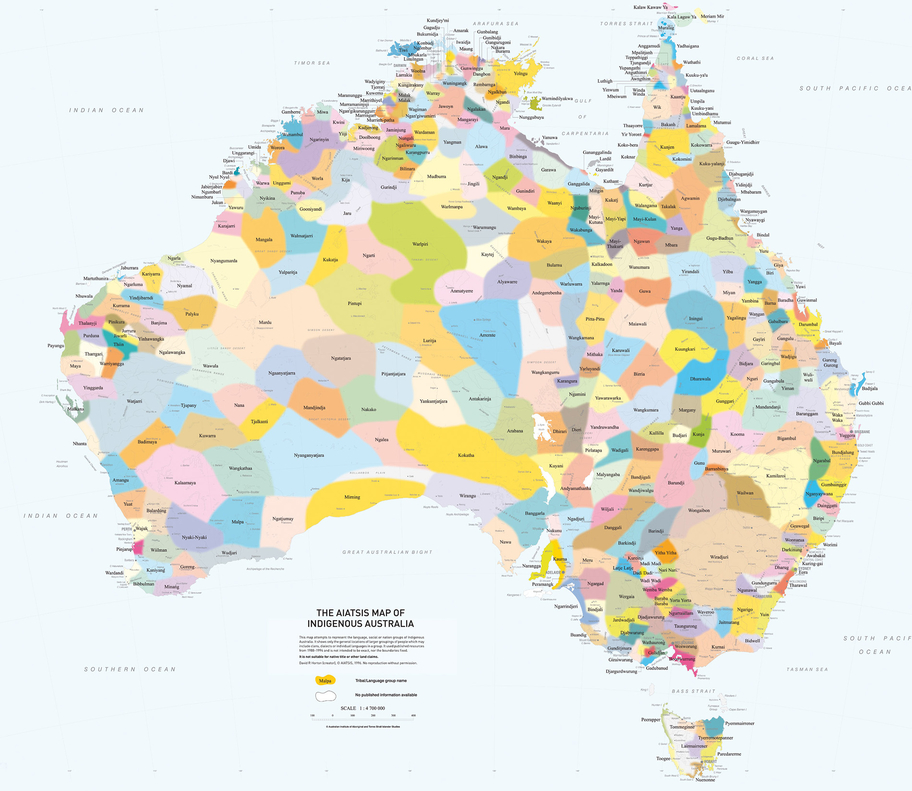
    Last week at office, I noticed a new map of Australia on the same wall. A different one, with blurred border lines separating a huge number of “states” and “territories”, all highlighted with various colours, with new names. New, to me – a recent immigrant.

    As a child, I loved colouring maps. I was fascinated by borders, routes and names. 

    “Where are the border lines?”

    I always wondered how the boundaries of states and nations were made. I don’t remember much, but I would ask, who drew those lines and how. During trips to a temple in the adjacent south Indian state, I might have pestered my dad or an elder cousin, “Did we cross the border already?”, “Where is the line that i saw on the map?” I wonder if they might have pointed at the river and the mountain ranges as the bus entered the border town. I never understood.

    Years later, the much grown up adult me would figure it out. Those borders on the map are not real. They are a socio-political construct. Nothing to do with geography.

    “Routes that create territories”

    In the past, the invaders and colonisers used maps to discover new territories. To then change the landscape, peoples, culture, everything. They say Map is not the territory. But those conquerors used maps to make new territory. Bruno Latour says, “The great man is a little man looking at a good map”.

    We trust a map so much these days that we are lost without it. We take it literally, or almost fatally, as this German driver did (from a story I read in an old copy of Readers Digest).

    The semi-conscious middle-aged man was being questioned at the hospital after his accident, “Why did you drive your car at high speed directly at the barricades. Didn’t you notice the exit was blocked for repair. That too, on a sunny day?” His reply, “I followed the GPS on my car”.

    Names: old – new – old

    The city I grew up – Coimbatore – is near the foothills of the beautiful hill station, Ooty. Its historical name is Uthagamandalam. The British made it their summer capital of the south. The name was a mouthful though. They tried pronouncing, but made a mess of it, naming Ootacamund. The locals might have resented it, even if they couldn’t have resisted that change. Eventually, it became Ooty

    Thirty years after the British left, the local government decided to change the name to its old Uthagamandalam. Still, a few locals resisted this change. But they might have figured:

    If the names could be changed then, 

    the names could be changed now.

    The new (old?) colourful Australian Map

    That map on the kitchen wall last week was to mark the National Reconciliation Week. The AIATSIS map is a “visual reminder of the richness and diversity of Aboriginal and Torres Strait Islander Australia. It was created in 1996 as part of the Encyclopaedia of Aboriginal Australia project and attempts to show language, social or nation groups”.

    Maps, with its borders, routes and names, decide the way we see the world. They don’t just tell us where we are, they determine who we are.

    Perhaps, we don’t stop with a new map on the old wall.

    We bring the old map back to the new minds.

    (This is from my speech delivered last week at our Toastmasters club on the theme of National Reconciliation Week in Australia, which is all about “relationships between the broader Australian community and Aboriginal and Torres Strait Islander peoples”. Please note, while I am still learning about this important topic, my attempt was to touch on the related topic of maps, through stories, anecdotes and insights.)

  • Blank

    Blank

    I couldn’t write a blog last month. I didn’t want to. I didn’t want to write one of those self-deprecating takes on a life experience and fill it with wise-cracks. I was struggling for ideas.

    I was actually struggling for words to describe the state of my mind.

    Situation in India

    Everyone seems impacted by COVID, not just counting the unfortunate ones invaded by the virus. The visuals on TV last month were striking – ailing men and women standing in long queues to secure hospital beds, oxygen cylinders or anti-virals. Haunting scenes of bodies that lay queued up in front of a crematorium. Social media, especially twitter was abuzz with cries for help, but in equal measure, with quick and life-saving responses from strangers. The state of my mind tasted like a cocktail of despair and hope. 

    Heavenly prison

    As I talked to my parents, friends, uncles, cousins, ex-colleagues, almost anyone from the land that birthed me, I tried to listen more, but found nothing helpful to offer. My wishful words sounded empty. I watched all this nervously from a safe distance, within the safe comforts of a western country that has a much lower population, a better system, and lucky. Also, cocky. Australia conveniently closed its borders and threatened – with a jail term and a ridiculous fine – anyone trying to come back to the country. The state of mind : angry and helpless.

    Help?

    I am one of the 18 million Indian diaspora spread around the world. What can one individual do, after all ? Of course, I try to support my immediate family and friends in any which way I can – mostly monetarily, given travel restrictions.

    What else could one offer, beyond money and empty words ? I saw Indian-origin doctors offering virtual services to ailing patients in India. I saw millionaires sending flights-full of useful materials. I read about corporates vaccinating their employees. I came across inspiring stories of nameless individuals helping out strangers in dire need.

    I realised then, my craft as a software engineer is not directly useful to my people at the moment. Or maybe i don’t know what to do with my skills – beyond earning a monthly salary.

    What can i do or make?

    Eventually, I joined a small group of the Indian community here in Canberra, who organised a South Indian vegetarian food fair in the temple, to collect funds for a hospital in Coimbatore. We all prepared idlis at home and sold it at the temple. A decent collection resulted that should be helpful. Well, something necessary if not sufficient. As I did my bit around the kitchen, I wondered if this was all I could do.

    The state of mind: feeling inadequate.

    Coping strategies

    Though my family is largely unscathed (fingers crossed), my parents are yet to be vaccinated. I fear we are sitting on a time bomb. Meanwhile, life goes on; work consumes my days, leaving the night wide open for dreadful anxiety. Often in the middle of the night I wake up to check whatasapp, hoping not to catch a text or a missed call.

    When no actions are possible, I turn to distractions. Movies, sports, trivial news in social media, celebrities, anything. And books, especially on philosophy.

    Kural and Senaca

    I turned to Thirukkural – the Tamil classic text from 300 BCE, written by an unknown author (we call him Thiruvalluvar) who has written 1330 non-religious yet sacred verses or Kurals (couplets), seven words each. These kurals are like morals and commandments covering three key aspects of life: virtue, wealth and love.

    There are 10 kurals that cover how to deal with sorrow and despair, each offering a unique coping strategy. A few explain the nature of sorrow and suggest being realistic. A couple of kurals advise us to defend against the incoming trouble. But, a few kurals insist fighting back: trouble the trouble to make it run away, or something of that sort. But this kural below has the best strategy of it all, and I remember being surprised when I first learnt it:

    இடுக்கண் வருங்கால் நகுக அதனை

    அடுத்தூர்வது அஃதொப்ப தில்.

    If troubles come, laugh; there is nothing like that, to press upon and drive away sorrow. (Translation, courtesy valaitamil.com)

    Laughter is indeed the best medicine. But, the state of my mind ? Not funny.

    The Stoic’s take

    In the end, I got a better medicine from the greek stoic philosopher, Seneca, who is now getting more popular after 2000 years.

    Light griefs do speak; while

    Sorrow’s tongue is bound.

    I figured, my mind was at a state where no words or thoughts could spring.

    Blank.

  • Can you please pass that insult ?

    Getting up at 5 am on a Saturday and in front of the laptop without even the customary cup of coffee? The wife was startled and wondered what’s gotten to me. That, I would learn for myself a few hours later, as I finished authoring a detailed analysis of the project situation along with some suggestions to mitigate risks. When I pressed the Send button, the email carried more than just the slide deck I had attached. It also took away the residual feeling of something I struggled to put into words the whole night: Why did these guys exclude me from recent discussions?

    We all face situations where we have been left out. What we do in those situations determine who we really are. It tampers with our ego, causes a bit of anger and we take offence. Whether we are part of a team that builds a space ship or if we are jockeys racing horses, or simply playing a game together, sometimes the ingredient that stimulates us to produce an inspiring result is not the respect, trust, or love from others. It just might be an ounce of insult passed on to our side of the table.

    Recently my (now “ex”) tennis doubles partner asked me to consider not turning up for the finals we were going to play in a level three tournament in a modest club in our small city. That way he can partner with a reserve player to increase the chance of winning. (The irony was lost on him that I beat him in a singles match just the previous night). I didn’t go and I still don’t know whether they won. But I knew that was the end of that strange “friendship”. Have I become more serious about tennis? Oh boy! I began playing more often and I even try that single-handed cross-court backhand shot once in a while, forgetting I’m still an amateur who is yet to learn how not to dance while hitting the ball.

    I am not a saint, though. And this has to come out of the system today: I did contribute to someone becoming an inspired table tennis player many years ago by means of my disrespectful behaviour.

    At the end of a relaxed day at work in the Hyderabad office, I was busy playing a game with another colleague. I didn’t pay attention to my friend as he appeared near the table. He was still learning to hold the racket and here I was already able to move the ping pong ball across the net. My colleague and I continued to play games without giving a chance to my friend who waited for an hour in vain. Six months later he surprised (shocked!) me by beating the blues out of me. And sixteen years later he is still a friend (I hope).

    Getting rejected is an awful feeling. Not being given a chance is criminal. Alas, nature does that all the time. It also teaches us how to thrive.

    As a year 10 student, with my eyes looking at an unknown future (I was caught looking outside the window regularly), I was intrigued by this question posed by our class teacher: what do we want to do next?. “I want to prepare for the IIT entrance exams” (the premier engineering institution in India). It was not the laughter from my class mates that put me down. The teacher’s discouraging words: “Son, I don’t think you can do it” pushed me down but only momentarily. Two years later, I eventually failed to get into IIT. But those two thousand hours I spent preparing for that exam, prepared me for the future. In the end, the good old man’s words only increased my appetite to aspire.

    In the climax of the film Seabiscuit (name of the horse), the jockey is on his most important race of his career. The horse and the jockey are injured. They needed more than mere motivation to win. Then he comes with this trick: he asks his friend who is another racer to help by bringing his horse close to Seabiscuit during the race; close enough to tease and “give a look” at Seabiscuit in his eye. Those few seconds were just enough for the trailing Seabiscuit to get spurred and race to victory.

    We all need a kick in the back once in a while. It is a cliché but it sounds nice in this context: when you fall you better try to fall forward. We don’t know why we react the way we do when we are pushed. We cannot describe much in words or convince our loved ones. We choose and avoid some of the battles. But the scars choose us and we remember. We then do the only thing that makes sense when slighted or insulted.

    We fight.

  • How to survive a meeting

    When I started working (I mean, working as opposed to the many months of training sessions) in my first job, I noticed people in the team spending a lot of time inside meeting rooms than at their desks. The work assigned to me involved coding a piece of software – at least that’s what I thought; soon it became clear to me that without talking to the seniors and colleagues i cannot get anything done. Not that it was unexpected but it astounded me that i spent more time writing emails and talking than coding. Worse was when i struggled to obtain availability of meeting rooms and subject matter experts. Thus it was evident that communication skills were as relevant as computer skills, especially when one tries to share ideas and seek improvements to make a collective decision.

    I should have seen that coming. It was during the final years of college as we were preparing for job interviews that I encountered this construct called Group Discussion.

    We had to debate on a topic and you are judged on how well you make your point. We were given the controversial one: to agree on the most effective form of government (in the subcontinent): democracy or dictatorship. I was still struggling to put my views across, mainly in English and was intimidated by the bunch of guys who waxed eloquence on the principles of democracy, while being struck by the plain and simple logic evoked by the other group who championed dictatorship. I was still waiting for my friend to open his mouth yet – I knew him as a sharp and fierce communicator – when I was prodded to speak. I kept fumbling along and made a mess of the only speaking opportunity. I was in a 50-50 mode mentally, but could not express that at all.

    Formally, a meeting is defined as a situation when two or more people meet, by chance or arrangement. Effective interactions and collaboration among workers are the building blocks of successful organisations. The power of collective human consciousness is unparalleled. It is quite important to structure such gatherings since otherwise, they quickly degenerate into a platform for egoistical arguments and cacophony.

    There are many simple rules for running meetings which I think are not so simple. There are companies that take it very seriously. Last week, i read about Jeff Bezos’ rules of running any meeting at Amazon, which included no power point presentations apart from insisting everyone to silently read memos for the first half of the meeting. That reminded me of a suggestion I made to my team many years ago. I was still a rookie but I had the gumption to strongly recommend that the entire team be forbidden from talking to each other for the first three ‘silent’ hours in the morning. I was not the most popular person in the team.

    While I m not criticising the very purpose of social interactions in a corporate environment as such, I want to draw your attention to the fact that a typical knowledge worker in this age has less time for him/herself. More than 70% of my work time gets spent on meetings. They come in various terms and forms: discussion, idea generation, design thinking, status update, issue tracking, planning, synch up, stand up, get together, morning prayers, kitchen cabinets and what not. I read this somewhere: “a meeting is a chance for people to share their own confusion with a broader audience, contributing to the collective chaos.”

    How to survive such meetings? How to conduct one? Enumeration can come to the rescue. When you make a simple list of items to be addressed and stick to that, you can at least complete the meeting if not solve world hunger. The real challenge is to come up with such a list.

     I remember a particular issue-tracking meeting that occurred during a critical phase of the project. My manager asked the team about the progress of resolving defects which were pending for weeks. “We have made very good progress in the last two weeks; many of the issues are resolved; some of the remaining ones are being corrected; most of the corrected issues will be tested by tomorrow”. It took a whole thirty minutes for the boss to determine the list of issues in the first place.

     Can we try to be more objective and mainly focus on data, facts and actions, while ignoring the emotions involved? At your peril. You see, meetings are also occasions where people vent out their frustrations, and real human connect occurs only when you let others express themselves. My own inadequacies in the listening front is well documented in my previous blogs. Having said that, I believe it is cruel to let someone go on in their line of argument when everyone realises it is a rabbit hole, especially with the time constraints we live with.

    Ideally, a meeting is just a means to an end. An end outcome that moves the team forward. Actions are assigned and a direction emerges. In reality though, meetings need not always be so serious and I will run out of space writing about many funny episodes. For instance, I have seen people rushing to point at others as action owners, often at those who were absent.

    But many a meeting occurs in a hostile/political environment where unwritten rules manifest and items not in the agenda dominate the proceedings. In such situations, a significant amount of time is spent post-meeting to minute the discussions and document actions which gives an opportunity for the host to shape the outcome of the meeting even as he was unable to influence it while it occurred.

     Though one should not treat a meeting like a war zone, it is fascinating to see people trying to have the last word. But usually the ones who are able to listen to differing view points, forge relationships and offer creative alternatives emerge as real change makers. They make everyone think and realise it was worthwhile spending time away from their desks.

     My college friend demonstrated that many years ago, when finally his turn arrived during the group discussion. As the crowd was already dissected into democracy advocates and dictatorship worshippers, our man got this to say. “I think we should try democratically electing a dictator”.