Category: Practical knowledge

  • A beautiful mindset

    I have struggled with the word strategy all through my career. No, I haven’t struggled to make a plan or define a logical sequence of activities, but this whole strategising thing is something else that bothered me. How do you successfully get through to the other side of a challenging project to deliver, or an uncertain future for the product and team, or an unexpected change in career? Dealing with, and winning at these require more than grit or luck. Pure logic doesn’t help beyond a point. I have often heard from colleagues that life resembles a chess game, one to be mastered.

    I am bad at chess.

    My other problem is with the word, Art. There is an art for anything these days: “Art of speaking..”, “Art of writing…”, “Art of winning…” and of course, the ultimate “Art of living”. All my life, I was more into science and math, and I was particularly bad at art.

    Bad at art, and worse at chess, I have no hope then.

    I am good with reading books however, and to my pleasant surprise I landed on this book recently that carried both these words in its title: The Art of Strategy, A Game Theorist’s Guide to Success in Business and Life.

    One of the authors of this book is a professor in the US but of Indian origin, which made me think: after all, wasn’t the Indian civilisation that gave birth to Chaturanga, the predecessor of the modern chess game? Even the famous epic Mahabharatha revolves around a game of dice gone wrong for the Pandavas. India is also the place of Chanakya the philosopher-guru who authored Artha-Shastra – a treatise similar to the more famous Art of War.

    The definition of strategic thinking was very helpful: “the art of outdoing an adversary, knowing that the adversary is trying to do the same to you”, “art of convincing others, and even yourself, to do what you say.”, “art of putting yourself in others” shoes so as to predict and influence what they will do.

    Out of the many strategies and approaches, the common theme for me was the element of surprise, as a winning ingredient in any strategy, especially dealing with bullies. The authors explain the best strategy to confront a powerful and intimidating bully at school, at work, or even a dictator: a sudden, visible, unexpected act of defiance by the collective.

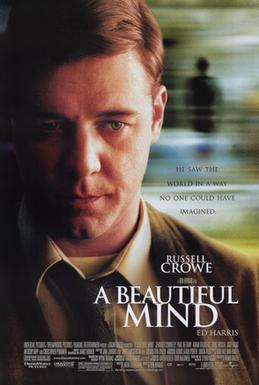
    The book as such is hard to finish, but there are some interesting parts not to be missed, especially the stories from world war, movie references (The Beautiful Mind, for example), and other real-life examples. The definitions of various game theory constructs eg. zero sum game, dominant strategy, Nash equilibrium etc. ) are well explained, until they loose you by going deep into the mathematics.

    Yet, there is more to unpack from this book. It says at one point, “All of us are strategists. It is better to be a good one, than a bad one”.

    That sounds to me a practical, if not a beautiful mindset.

  • A page from a book is more than that

    I notice my family, friends and acquaintances, not reading books.

    Some of them don’t have time in their lives right now, to dedicate an afternoon to even begin to read from a book they bought many years ago. This blog is not for them.

    A few don’t like to read books, they tell me. They have apparently lost interest in the written word. I am writing this piece, directly looking at them. Yes, I know who you are.

    I am kidding. I promise, I won’t preach why you should read. Nor would I prescribe a bunch of books on this last day of the year. I am kidding again.

    This is more about two moments from my 2021 trip around the sun. One acted as an anchor, giving me a sense of what I loved doing, and another that brought out the force in me, and gave direction.

    The Greeks again

    In February this year, on a lazy Saturday afternoon, I saw a tweet by a speech consultant @JohnfBowe. His article explained how two thousand years ago, the Greeks figured out that public speaking – the art of rhetoric – is a foundational skill to be acquired by everyone. Yeah, for once, it is not all about philosophy when it comes to the ancients.

    I ended up buying his book. It begins with the story of his cousin whose life takes a dramatic turn after joining Toastmasters. The guy never left basement until he was fifty nine years old, but soon got married, and overcame shyness (not necessarily in that order), helped by the world’s largest organisation devoted to the art of public speaking.

    John’s book made me reflect on the way I do presentations. Content is king, they say. I no longer start my preparations researching for what to include. The recipient(s) of the message take centre stage, more than the message itself. Audience is king.

    I reached out to the nearest club in Canberra. I wasn’t shy, but curious. I was welcomed into the Woden Valley Toastmasters club as a guest, a pivotal moment for me this year. I soon became a member, learning how to talk more clearly, persuasively but mainly, to keep the focus on my audience, what would be valuable to them. And to ramble less.

    Incidentally, around the same time in March, I got an opportunity to present SAP’s product strategy at a customer’s town hall meeting addressing roughly 150 members of their IT team. I remember spending more time on the question: What do I want them to think and feel, when I finish talking.

    A random tweet guided me to the book about ancient Greeks, eventually taking me to the Toastmasters, on my way to a successfully delivered talk.

    Winning is the (only) way

    Later in July, I faced a sudden bout of confusion and uncertainty about the way my role was perceived at work.

    One book brought back the fighter in me. It wasn’t a random tweet this time, but a slice of podcast conversation with the NBA star Chris Bosh talking about a book that shaped his thinking: The way and the power – Secrets of Japanese Strategy. Its about how a samurai master deals with confusion and uncertainty; one who controls his mind. One who would not lose. I ordered it immediately.

    I can’t say much more. But reading a couple of chapters, it felt as if I had flipped a switch in my mind. I woke up one morning and decided to win. Not merely adapt or survive or manage a situation. To win.

    You want the whole meal, not juice

    Why bother with a book these days, if one can acquire such insights through tweets and podcasts? I sense, reading a book – even skimming through a few pages – is way different than trying to grasp ideas distilled by someone else – a secondary process. It is the difference between eating a wholesome meal and drinking a juiced up version.

    A book could change the way you think about this world. Your world.

    Three sixty five days from now, on another new year eve, I will want to hear from you about the pages and words that influenced you.
    For the ones in my cohort too busy to read: One page consumes three minutes out of one thousand four hundred and forty minutes in a day. A typical book has three hundred pages.

    I rest my case.

  • Explore

    Explore

    What if I tell you, Christopher Columbus was not really an explorer.

    Well, I am not asking you to reconsider a historical fact. Am I even qualified to talk about exploration, while real explorers do their wild and uncertain things, I sit on my lazy ass on a quiet and comfy chair in a corner of my house?

    I am only interested in figuring why exploring is a fun pursuit. Exploration, not in the geographical territory per se, rather the “i want to explore more options before i decide” kind; exploring ideas and insights that change the way we think and transform us. Such a skill is a superpower, especially for knowledge workers.

    Suppose, your boss asks you on a Friday evening to come up with a completely fresh approach or an idea by Monday morning (it could be about a product, sales pitch, presentation or a new venture)

    And assume, that for some reason, google is down, internet connectivity is lost for your whole town during the weekend; however you have access to your bookshelf, your local library and can talk to your friends and colleagues in town.

    How will you go about your research? Which book(s) would you look up ? Who amongst your peers would you go to?

    The idea of (re)search or exploration has been key to our thinking and thus, survival. Often we start with building on existing ideas, contacting known people. If we are lucky, we get useful points, connections between those, and once in a while, stumble upon something new – something we never knew it existed when we began the pursuit.

    We all have been using the term, search so loosely. Tamara Munzner’s book on data visualisation has this matrix / table that made me think more clearly about the vagaries of search.
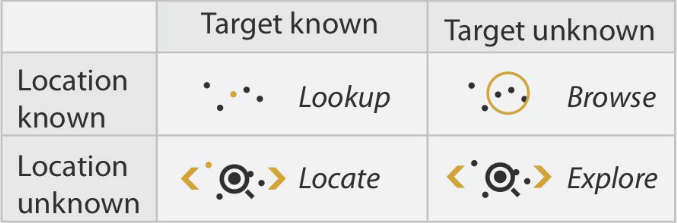
    Lookup: most of the time, we know what we are looking for, and where to find it – like in your neighbourhood grocery store. You know what you are looking for, say milk. You remember where to go and fetch it. Easy and efficient. Why? So much organising has gone behind the scenes. I am not sure if it is even possible to organise and store information/ideas like a grocery shelf.

    Browse: Sometimes we don’t know what we are looking for, but very clear about where to look. Example: in a library, you know there are enough gems buried inside those pages. All you need is time to browse a bit, and with some luck you might find something relevant. You might even stumble upon something new. This is fun – and efficient at the same time. Perhaps more exhilarating compared to fetching milk from your grocery store.

    At the same time, a bit of organising is a pre-requisite to make this work. You should have accumulated related ideas or books in one location that you can go to. Or subscribed to Netflix, where the algorithm does the job for you – to keep you constantly stimulated.

    Locate: this is like searching for your missing car keys. You know what you are searching for, but don’t know where it is. Also, this is where Columbus comes in. You see, in 1492 he set out “to find a direct water route west from Europe to Asia, but he never did”, landed instead on a different continent. He had his target/destination (Asia) known but the location (route) unknown. Thus, as per this matrix’s strict definition he is not an explorer, just a locator. And he failed at that too. There is even this blog that talks about how his GPS failed him big time. In the end, he returned empty-handed, frail, poor and without any recognition.

    Sorry, I am taking a bit of creative liberty here. My point is: when we set out to find new ideas or insights, lot of time and energy is wasted in looking in the wrong direction. One of my simplest life-hacks is to ask for directions: the “right” colleague who might lead me to the “location” of many useful and interesting things. Because, most of the times, we don’t know what we don’t know.

    Who Lucky: Jim Collins, the author of the book Great By Choice, has coined this phrase who lucky. “you get, not just luck in life, but “who” luck….And “who” luck is when you come across somebody who changes your trajectory or invests in you, bets on you, gives you guidance and key points.” (quote from Jeff Hilimire’s blog)

    Finally, explore: The dictionary definition of explore: travel through an unfamiliar area in order to learn about it; inquire into a subject in detail. But as per the matrix above, explore is: we don’t know what exactly we are looking for, and we have no clue where to start searching. That sounds like pain. But imagine, if Columbus convinced his Spanish financiers that he is simply out on a voyage to discover something, no promises. He was better off in not setting any expectation, choosing to ride the vessel of uncertainty, with his mate named luck, and serendipity as his diet.

    That would have been fun. The kind of exploration I am talking about.

    However this pursuit is not trivial; not a reckless exercise, not without any structure. Here are a couple of useful techniques to explore:

    Visual thinking. For me, this is less of a technique, more of trying to be human. Once in a while, get off your device, walk outside and look up, locate the sky and browse the many stars. The change in visual stimulus is all you need sometimes. For a more earthly example, if I need an idea for presentation, I google the topic (eg. Technology Platform) and go “images”, and see the many illustrations. Something clicks in the mind, as this post illustrates how creative ideas emerge out of visual thinking.

    Another useful one is Lateral Thinking, popularised by Edward de Bono. An example is Random Simulation. I use this when I need an opening word or a central theme for a speech or a blog. This is how it works: Choose a random number from 1 to 10, say 7. Open a random page of a random book; find the 7th word in the 7th sentence of that page. Reflecting on that word, its meaning, would evoke a feeling, trigger an idea, shape our thoughts.

    (for this blog, that random word turned up to be destroy; no wonder I have been cynical about Columbus all through this piece)

    The power of exploration is: only direction matters. Your curiosity is the direction. Go where that curiosity takes you, following what appeals to you, not worried about the number of steps taken, points collected, victories or failures; not anxious about reaching any destination.

    In any case, as Yogi Berra said, if you don’t know where you are going, you have a good chance of not reaching there.

    PS: This is the final of a 3-part blog post “How to Think Better”.

    Part 1: “How to Think Better – Externalise”

    Part 2: “Uncategorised” aka How to Think Better – Categorise

  • Uncategorised

    Uncategorised

    I bet you won’t continue reading this blog beyond a point, unless you find something new. Right at this moment, in your brain, a bunch of neurons are firing to figure out what this new is. I wonder if you got some ideas from the title, or some of the pictures below which your eyes cannot help scanning. I suspect you have mentally tagged this blog already – technical, boring, long. Interesting (hopefully).

    Categories

    Our brain is wired to perform instant pattern matching and categorisation. Categories have strict boundaries which help us compare a “this” from a “that”.

    This skill helped us survive as we made quick decisions under uncertainty – by differentiating between a branch of a tree and a snake; between a cold, warm or hot object. All thanks to the much evolved part of our brain: prefrontal cortex.

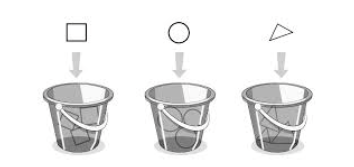
    Now during the information (delu)age, we need this skill even more, as we distribute every bit of new information to various buckets. Worse, we do pattern matching even when the data doesn’t make any sense. Lets attempt this puzzle:

    Kiki and Bouba are two nonsense words from a non-existing language. Can you suggest a match between the words and the two images below ?

    Analogies

    Cognitive scientist Douglas Hofstadter says categorisation and analogies are the way ALL thinking occurs in our brain. Watch him narrate this (15 minute into this hour long video).

    We have so little control over this process. If our mind always compares and contrasts – as we see, hear, smell, touch and so on – several downsides occur. In a rush to make a quick judgement, we often make the wrong call.

    Prejudice

    I won’t talk about serious topics like racial stereotypes and unconscious bias in this blog. But I share a recent experience at the food court, when a seemingly innocent comment from the lady at the counter made me cringe a bit.

    I sensed her watching me order rice and vegetarian curry with an additional order of papad. The many neurons in her brain didn’t have to perform heavy gymnastics to categorise me, as she suggested “so, you must be a south Indian?” I nodded. She said, feeling settled, “makes sense!”

    She wasn’t wrong this time. No harm done. (maybe my moustache was a give-away). But not all of us are right when we carry out some lazy, sub-conscious thinking. When we assume.

    Cognitive Bias

    Daniel Kahneman is considered the father of behavioural economics. In his work, he underscores the fact that humans are not rational at all while making decisions. The nobel laureatte’s book Thinking Fast, Thinking Slow has made me more aware – if not smarter – as I learnt about various cognitive biases. A sample for you: Confirmation Bias – the tendency to search for or interpret information in a way that confirms one’s preconceptions. (eg. anti-vaccinators).

    Rob Dobelli’s The Art of Thinking Clearly is another easy-read that I recommend.

    Black Swan

    Being aware of such biases helps us avoid an ontological shock.

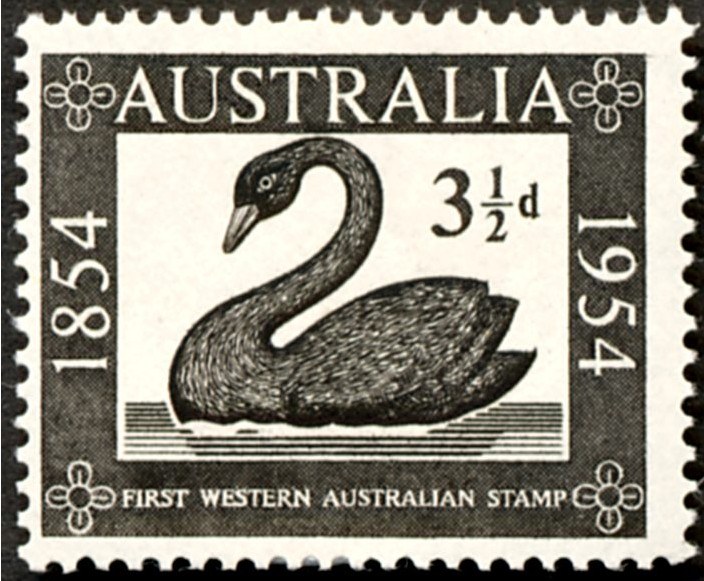
    In the 2nd century, a roman poet coined the term black swan describing an imaginary bird – since at that time, all known swans were white. That was until the 17th century, when Europeans landed in Australia, when they spotted a black swan.

    Nassim Nicholas Taleb tells this story in his book The Black Swan: The Impact of the Highly Improbable. Note, the book is not about birds, but how we struggle with things that shock us – outliers.

    I particularly loved the irony – these 17th century travellers declined to categorise that bird as a swan at all. In their mind, a swan had to be white.

    Moral of the story: be aware of how we categorise. And, when we encounter a new idea that cannot be boxed onto an existing bucket, it deserves a new category on its own.

    The Meditating Brain

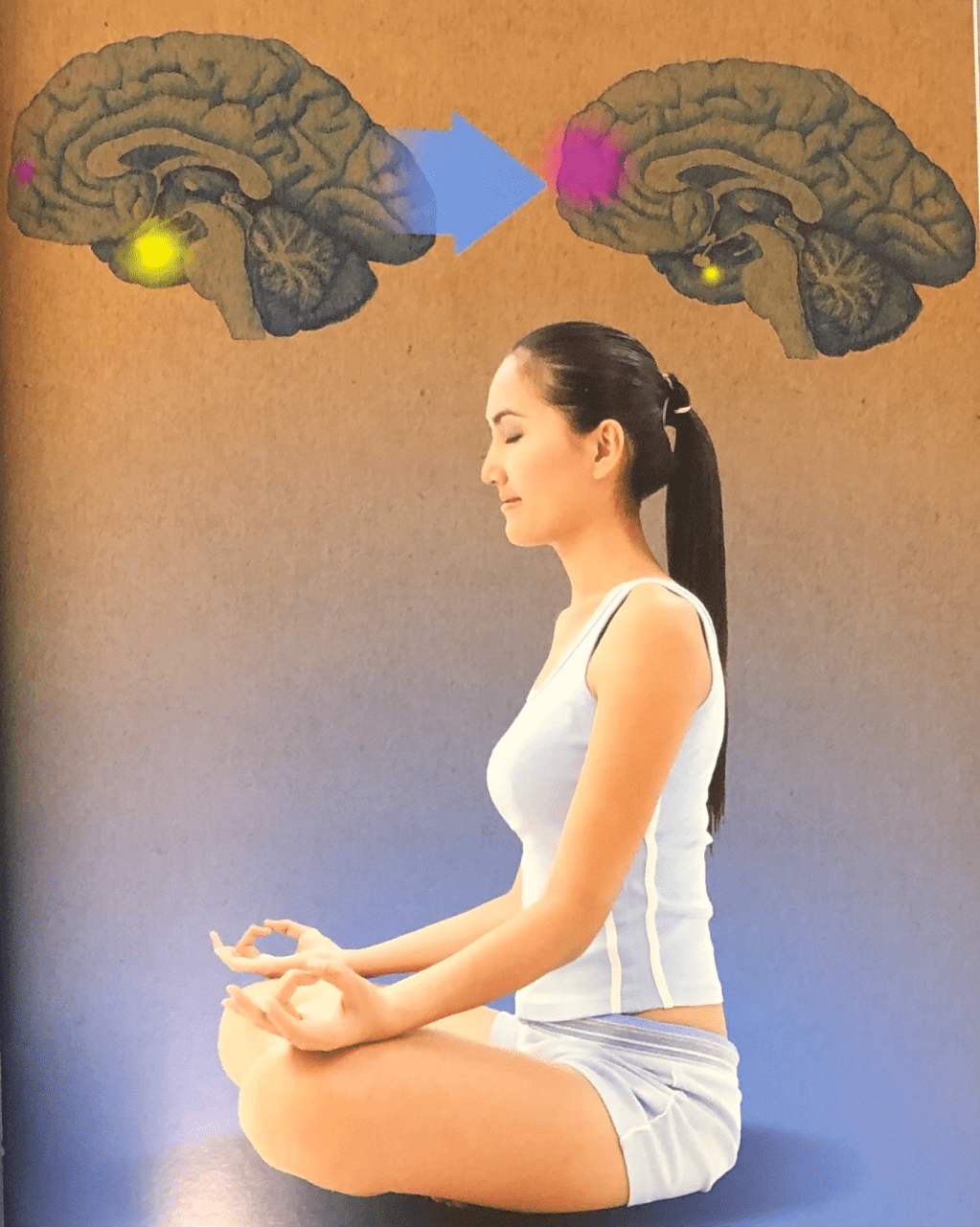
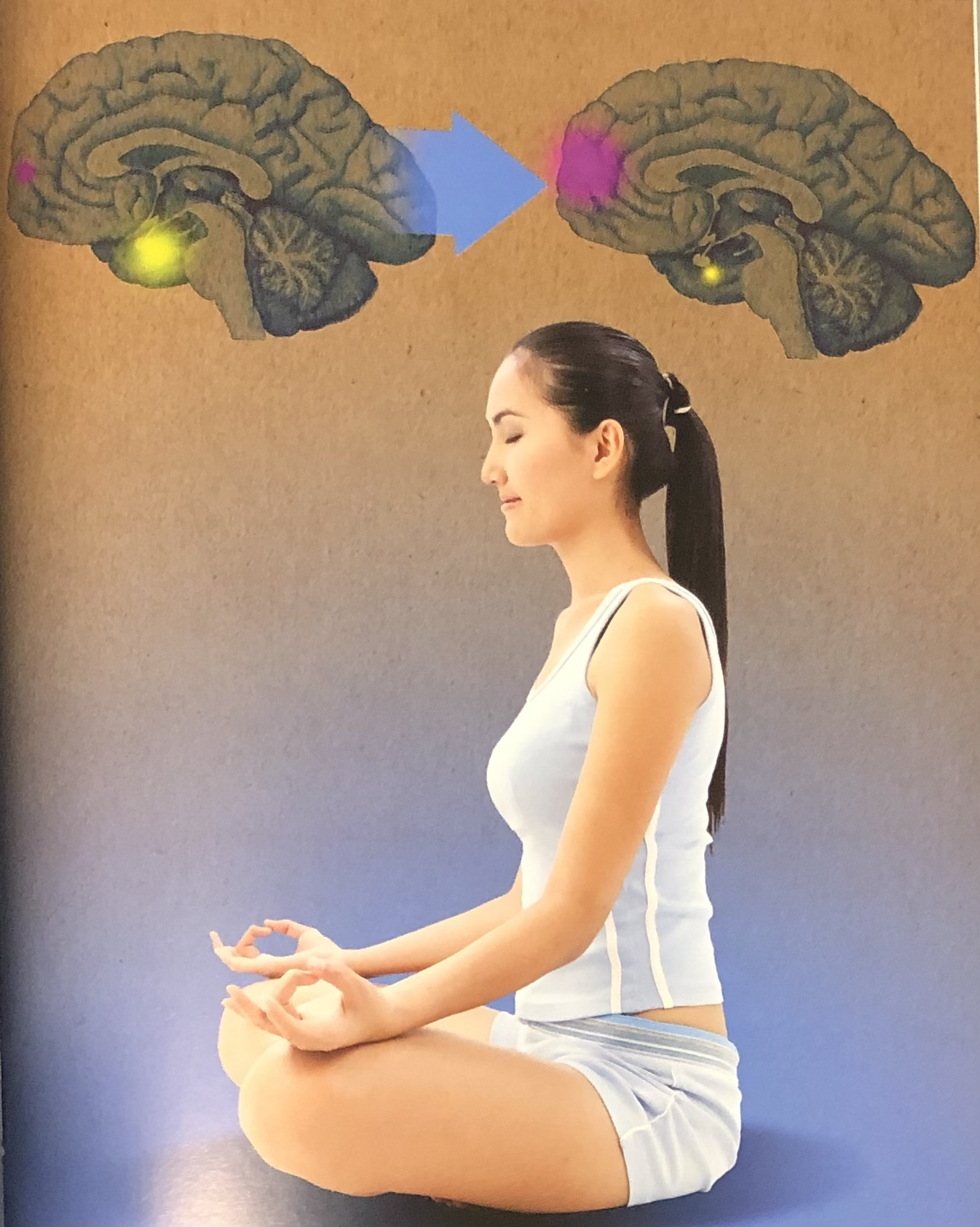
    I mentioned earlier, how prefrontal cortex helps with categorisation. The picture-book “30-Second Brain”, edited by British professor Anil Seth, illustrates how meditation rewires our brain.

    Just after 4 sessions of meditation, it is found that we use less of the primitive areas of the brain, activating the prefrontal cortext that helps us perform higher orders of cognitive functions and intelligence.

    Kiki or Bouba ?

    Did you associate the word kiki with the sharp edged object? You are like the 95% of participants of a famous experiment “Bouba/Kiki effect“.

    We cannot help ourselves especially when we don’t realise we are making these associations. Are we stupid, are we wrong? Should we stop categorisation altogether ?

    I finish with the simple and slightly modified words of a famous Henry Ford quote:

    Whether you think you should, or you think you should not – you are right.

    PS: This is the part 2 of a three-part blog post “How to Think Better”.

    Check out Part 1: “How to Think Better – Externalise”

    Part 3 to be written: “How to Think Better – Explore

  • The Karate Lies

    “Say two statements to describe yourself: a truth and a lie. Let the team guess the right one”. A silly but surprisingly effective way to spend a quarter of an hour of an otherwise boring day of sales planning sessions. It was also a chance to get a new perspective about colleagues that we assume to know well. Everyone tried to be clever; a few stated one attribute about themselves super quick while hesitating or scratching the head for the next, which gave them away.

    At my turn, I claimed two achievements: 1) represented my college Tennis team 2) hold brown belt in Karate.

    No one was right about me. Having to assess the lazy, lean, slouching and unimposing fellow, they all could be forgiven for not associating me with martial arts.

    What was your guess ?

    Now, I don’t remember any of the karate stances or techniques, and I for sure cannot punch without hurting myself.

    My father introduced the 8 year old me to karate. He just didn’t enrol me to a class; he would talk to the karate master frequently; watch me train, as he sat on the side-lines. He would attend every belt ceremony. While he encouraged me to be physically fit – he had built up a few muscles himself – i was a lazy kid looking for excuses. I did well academically and insisted holding a book rather than dumbbells and plates (he had custom-built for me). If only I had 10% of his passion.

    Still, I kept up with the karate lessons for the next few years. Getting up at 5:30 am thrice a week, cycling through the dark alleys to the next suburb, I would meet ten more of my sleepish class mates and our no-nonsense karate master smiling at us. He insisted on warming up – made us do knuckle push ups on a hard, sand surface. The actual karate stances (katas) will be taught much later. He emphasised learning discipline, mind control and self-defence, before acquiring skills to flex, punch and kick. “Be alert, block and defend. You will do just fine”.

    Occasionally, he will organise sparring – fighting an opponent – and I would be the worst of the class. I did well on theory and trembled on a real combat. I survived quite a lot of those sparrings by employing my defence techniques (A little bruise here and there wouldn’t count).

    I once had to face-off against a friend – a bulkier boy who happened to be my mother’s colleague’s son. After the fight, as we both walked back home, my mother spotted a bulge on his lips and wondered if he had hit his face against a wall or something (she obviously ruled out the possibility of me ever hitting another human being). “It was a punch”, was my friend’s reply, a clever usage of passive voice. My mother appeared confused as she took that word for a similar-sounding Tamil term “panju” (cotton). I then narrated to her: As he began attacking, I got nervous, crossed my hands and closed my eyes. Perhaps he lost balance and tripped. His face fell onto my hands, landing his tender lips on my tight fist.

    My next “fight” was a real one. During my year 6, a close friend Velan changed character, began teasing and bullying me as he joined a new bunch of mates. He was tiny but challenged me for a real man-to-man fight that evening. I was half thrilled and embarrassed to face-off against my own friend. I was scared too. After school, walking up to the soccer goal post, we looked at each other taking positions. By then, a crowd had formed to witness the spectacle of two bony structures about to create collateral damage.

    Velan punched. I moved my limbs in the air, more on impulse. Next thing I noticed, everyone running towards a crying Velan who had blood on his face. I cried much louder – maybe due to the impending loss of friendship, and also the tasty paruppu vada (fritters) his mom serves.

    These minor victories were exceptions on an otherwise vulnerable bunch of early-teen years. Feeling physically weak/inferior was part of growing up, especially being amongst intimidating (and bullying) class mates. Karate didn’t help achieve any level playing field with them – I stopped mentioning, to avoid being a laughing stock. Even during the many friendly encounters with my younger sister, I remember being easily out-manoeuvred. She never did any karate and had no fear.

    Meanwhile, I quickly progressed from white, to an orange and a green, then blue, a purple and eventually the brown belt. More self-doubt crept in. I looked myself in the mirror, imagining how it would feel to be ridiculed by one and all if I donned a black belt. While dad insisted to keep going, an unfortunate leg injury from a slightly-more-than-minor accident made me miss some classes. That was the excuse I needed to quit, and I never went back to the karate class.

    My father was quite disappointed. My karate master too caught up with me once during a neighbourhood event. I evaded all their attempts and buried my face in books.

    As I kept focussing on my studies and then, career, I have forgotten the karate kid in me. While my friends pumped iron, ran miles and bent their bones in yoga postures, I didn’t bother to move a muscle. I hit rock-bottom during my early twenties. Once with a group of us – boys (men?) teasing each other, I made a fool of myself announcing my brown belt credentials. One of the guys asked me to show if I had still got it – offering to receive my kicks on his body. The more I pushed and slapped with my slender legs, the louder he broke down laughing, as if he was being tickled. Worse, he was the thinnest of us all.

    I did win the truth/lie test at office the other day, but it will certainly be a lie if I claim any karate accomplishment. After all, when confronted, I have had more more losses, hardly any wins and occasional draws.

    As I calm down, I do realise that the real truth is somewhere in between. Karate was not all a losing cause.

    A few years ago, I caught myself in a road rage incident in Bangalore. My car hit an auto-rickshaw while I took a narrow turn, and it was all my fault. With my wife and kid in the rear seat, I got nervous as the thug-like driver ran towards me, signalling at me to lower the window panes. He hurled a few expletives and began to throw punches at my face. Six or seven hits, if I remember correct. My heart was racing, the girls were screaming, but I noticed him getting frustrated.

    All his hits were misses. Turns out, my forearms crossed up and blocked each one of those. My karate master must have been proud.

  • An Original Copy

    “Can you prepare a document in two weeks’ time that maps our product offerings to the customer’s context?”. I didn’t understand why I was excited at this ask from the senior colleague. You see, in the past few years, I had been more assisting others to produce content – be it a solution proposal or a commercial document – as opposed to creating something on my own. Recent changes in the team meant I do a different role – one that requires me to prepare a collateral of innovation ideas, sales plays, case studies and customer stories.

    A week later, the excitement turned into a bit of nervousness. Up early on that weekend, I was coming to terms with the reality: I actually don’t know anything about this customer. Equally bad, I am out touch with recent innovations and product offerings. The feeling soon turned into anxiety, as I realised I have just a week to go and I hadn’t gathered certain details about this customer that I had expected to receive from a colleague.

    You can now imagine why I didn’t publish any blogs recently.

    Finishing a cup of coffee at 5:30 am, a moment of serendipity ensued. I gazed around the bookshelf and spotted my project report from the post-graduation days. Bayesian Theory based Troubleshooting Tree. We didn’t call it Machine Learning back then. “I did create a lot of content back then”. Rewinding further to the under graduate days, the mind wandered around the times of second year engineering, particularly of those anxious days before the Computer Programming exam.

    “Help me with Math and I teach you Computer Science”, a great deal offered by my class mate who was a computer nerd but (surprisingly) dreaded the mathematical elements of the Electro Magnetic Radiation course. He had some past experience in writing code, while here I was, having never touched a keyboard. I had to deal with this upcoming test on C, C++ and FORTRAN, while still confused by some basics of programming. For instance, I never got the difference between an “IF” and a “FOR” construct.

    I duly followed my part of the deal. We spent couple of weekends before the exam working out many mathematical equations and more importantly, some techniques in constructing answers to impress, and pass, of course. He was elated.

    When it was his turn to help me survive the programming test, however, he acted weird. Suddenly his PC went kaput. The subsequent weekend, his mom gave him an errand. Or he fell sick. I was left with facing a prospect of failing an exam for the first time in my life. I realised my class mate had ditched me. Prayers didn’t help either.

    On the day of the exam, seated on the front row of the bus to college, I still had an hour to do something. My neighbour was next to me – who was not (yet) a friend but one who went to the same college – and was busy going over a rugged old book on computer programming. I wondered out loud, how learning a different programming language (BASIC, if you remember) will help him write exam on C language. He then lectured me on how programming is all about logic, common sense and algorithms, and that syntax is just a means to an end while semantics is all that was important. As the time was ticking by, he shared some techniques like drawing boxes and arrows to construct a flowchart, and alerted me to write English sentences in a pseudocode before writing complicated coding statements in C++.

    All those things my bus friend taught me ended up saving my soul that day. I just had to translate what he said to the questions. I took quite a bit of creative liberties in answering that day. I wrote and wrote; didn’t finish until the last bell rang at 3 hours and 1 minute.

    How do I do it again, 25 years later for a different test ? A second bout of caffeine infused a bit of hope. I told myself, i can prepare that document, if I just stick to those exact techniques from those college days.

    I perhaps need more reminiscing from the past.

    I remembered how I made my own version of subject notes, in those days before internet and google: by corralling content from the original Russian author who wrote complex stuff about electron devices, simplify the language and complement by adding notes borrowed from those always-diligent-girls in the first row of our class. And splattering the boring textual content with mathematical equations, electronic network diagrams and name-dropping of jargons here and there.

    I also recall how a few class mates who had never interacted with me otherwise, would come up and say thanks. Little did I know that copies of my notes had reached far off places.

    This wandering trip to the past was just the kick I needed to get started with the document. During the next three hours, I googled and found many interesting details about this customer and their goals, strategies and what not. I also searched for content from internal corporate sites. Eventually I came up with a decent package. It was much easier than I had thought. The moment I realised I was creating something that does not exist, I began feeling lighter. And like those engineering subject papers, I ended up producing a comprehensive document that I felt proud of: an appealing construct of words, images, ideas and proposals.

    In the end, the deliverable was reasonably well received. While I still have apprehensions whether this is going to be greatly useful, it did serve a purpose: to make a start, a pitch and create something original, if I dare say that word.

    Because, it is quite controversial these days to claim anything original. We are inundated with content created by millions of people past and present. The fonts, colours, words, ideas and possibilities – are all out there. You just need to make a new sentence. Create a new perspective by mixing up things. There are several techniques in Lateral Thinking and Design Thinking that justify, or even encourage this copying – or building upon ideas from others.

    I sense what makes your copy original is the context that you bake in. Its a paradox, we all have our own signatures in our stories, creations – whether they are mails, documents, presentations, talks, even texts.

    Remember, you are unique.

    Just like everyone else in this world.

    PS: the scores from the Computer Programming exam from 1996: The mysterious class mate made 88 out of a 100. I surprised him as well as myself: a cool 78. Unfortunately, the bus friend who helped me out, ended up with much less. Perhaps, he stuck to the truth while I wrote a novel. In the end, he turned out be a better coder than many of us and is quite successful in the silicon valley nowadays.

  • Bulk Fiction

    “You are losing the ability to focus on things closer to you”.

    The optometrist’s diagnosis for my recurring headache sounded rather philosophical. As he prescribed reading glasses, he assured me that my eyesight is alright and this is all quite normal in the forties, and I needed to wear them only for reading.

    A couple of days later, I realised I didn’t remove them except when at sleep. It struck me then, “reading” encapsulates plenty of things one does during the day: looking at numbers and texts on my PC when at work, catching a glimpse of the twitter feed on iPhone, reading books over the weekend. Even watching TV/movies involves a bit of reading (subtitles).

    Its not just the insane amount of blue-light exposed to my eyes that was worrying. All the stuff I inhale into my mind each day. what’s going on ? And, whats going in? Beyond work, how do i control the intake of the non-essential content? I began applying some mental filters.

    Fiction vs Non-Fiction

    We could classify all the TV programs, movies, books, social media that we consume into these two buckets: fiction vs non-fiction. Imagined stuff vs reality. To be blunt, the false vs the truth.

    Why do we love watching movies when we know most of them aren’t real? Motion pictures were a revolution in the last century, as disconnected and disadvantaged people were suddenly exposed to a world full of people they had never encountered, of stories never heard before, of places they may never visit. And the information flow that would have not occurred otherwise, though laced with myths, exaggerations and influences.

    But in this age of information overflow, why do we flood our grey cells with fiction? Agreed, imagined stories are fun while most documentaries are boring. We seek drama, meaning, pleasure and escape from reality. Movies and novels deliver those.

    There is another reason why acclaimed writers prefer fiction. Arundhati Roy, a Man Booker Prize winner and a fearless political activist, says she gets more creative liberty (and less trouble from the mob) as she indulges in fiction to tell a real story. In that sense, she claims fiction isn’t untruth. The reader is smart enough to relate to and reflect on the characters and derive their own meanings.

    No wonder these imagined movies and novels leave us emotionally richer and mentally relaxed. Albert Einstein wanted us to remember, “Imagination is more important than knowledge”, and sure enough, many sci-fi novels and movies paved the way for real scientific breakthroughs.

    How about we dabble with a bit of reality? Alas, we are surrounded by the cacophony of news, political events, wedding announcements of celebrities, and cat videos. The irrelevant and ugly truth presented to us each day are the very reasons we run away to a fictitious, imagined world.

    True Stories

    However, it is important to run into the real world from time to time, not away from it. Its not a strain, believe me. There are heaps of true, inspiring stories in the form of documentaries, biographies, podcasts and news. You could start with any domain: sports, science, lives of ordinary, unknown people.

    I indulge in watching test match cricket and tennis(especially when Federer plays). I love the commentary, particularly the way Ian Chappell brings better words to describe the same event I had witnessed. And the words and perspectives of the film critic Baradwaj Rangan are more entertaining than the movie itself.

    A few years ago, i enjoyed watching the documentary, making of Lagaan (Oscar-nominated movie) as much as the movie itself, if not more. The reel drama about a bunch of villagers achieving the impossible bet of winning a cricket match against the British officials, is more than matched by the real life struggle of a passionate (and crazy) team attempting to make a movie in an unforgiving desert.

    If you are intimidated by the term quantum mechanics or multiple universe, watch this fantastic animation story about the famous Young’s double-slit experiment about the nature of light. God, if such videos were available during our school-years. If you want a more entertaining science story, check this out: the story of how man walked from the jungles of Africa all the way across different parts of the world.

    There is this uplifting story of an ordinary bloke, Barry “Nugget” Rees, who never played cricket as such but became accepted as part of the Australian cricketing fraternity, that makes you look at these cricketers in such a positive light (this was before the sand-paper scam).

    Living in the age of fake news, we are permeated by maya(Sanskrit for illusion). The more we filter out the trivial stuff and focus on the what-if’s and aha-moments, the richer we become.

    I came across this quote some time ago: Small minds discuss People; Average minds discuss Events; Great minds discuss Ideas.

  • Philosophy lessons when waiting in a queue

    I watched my dad’s eyes as he took in the sights and (lack of) sounds of a new place (parents visiting us here on a short trip to Australia), as I took him out for a drive to a shopping mall, on the very day we landed. Later that day he remarked how well people were following the queue – whether one is driving on a busy road or waiting for the turn to pay. He was impressed by the absence of irritation or restlessness shown by the people waiting – and particularly the person at the counter who did not pay attention to any one else than the person in front.

    This resembles my own experience during my first trip abroad, to The Netherlands. I too noticed how everyone patiently waited for their turn at a doctor’s clinic, without any fuss, though being unwell.

    We get used to queues and waiting situations from the day we are born. There is an order and sequence to everything; At school and at home, we are taught to wait. However, when we are among a crowd of people wanting the same thing at the same time, the raging animal inside us tests our discipline and social manners.

    Manners were the last thing I worried about during my first near-death experience while waiting in a long queue at a movie hall, many years ago. With my cousins and friends I was thrilled initially, as we got permission to go by ourselves – and been given some money to spend. We decided to buy the cheapest ticket and had spent away the rest of the money, eating some junk. The queue was benign and orderly until when the ticket counter opened. There was a sudden rush behind us. Some strongly built and goon-like men were jostling us inside the closed corridor, which was covered on the one side with a brick wall and a steel fence on the other. My shoulders hurt – as I felt a leg clamped on me; one of my cousins screamed for help. There was no way out of that cramped space, and going back was most definitely not a viable option. We survived the stampede that day, and got our prize: a ticket to watch a fantastic movie.

    Key take-away: when people say they don’t quit or when they are called “finishers”, perhaps they didn’t have any other choice.

    I promised some philosophy in the title and here it is, but you will encounter some mathematics first.

    When you see two queues with the same number of people, you hope to choose the one which gets you faster. How many times have you been left frustrated being stuck in the “wrong” queue? Don’t stress. Murphy’s law states, “If something can go wrong, it will”. Extending that to queueing, this blog tries to analyse and explain using probability theory, that essentially, “Whatever queue you join, no matter how short it looks, it will always take the longest to you to get served.

    You learn that all queues lead to the same result. This is not very different from the core of Hindu philosophy: Any of the four paths can lead you to attain Moksha (enlightenment and liberation): Bhakti Yoga (Devotion), Karma Yoga (Action), Gnana Yoga (Knowledge), Raja Yoga (Meditation).

    From queues to spiritual progression: that’s a giant leap of thought, you say. If you are not the spiritual type, I have some practical lessons to survive a queue.

    I once had to wait for six hours in a queue to submit my application for a passport. My uncle dropped me at 6 am on an already hot and humid Chennai morning. A friend who had endured this previously had advised me to take some snacks and also gifted me a novel. I didn’t possess the patience or interest to read a non-academic book. I started watching people and tried looking at the blue skies, chirping of birds and the horns and smells of morning traffic (the office opened only at 9). The guy in front of me struck a conversation, which soon turned into an interview: where are you from? why do you need a passport when you are not even twenty? where are you planning to travel? I mumbled and stumbled for a while and then took a decision that changed my life. No, I didn’t kill him. I took the book out, sat down on the floor and devoured it. Weeks later, I received my passport, but in the meanwhile i got addicted to thick, fat novels.

    Lesson: what you do when you have nothing else to do, defines you.

    Sometimes, you wont even know where a queue begins, moving towards or ends. It is best to leave it to chance, rather than to put any mental effort. For instance, if im lazy, I stick to the same lane when driving, even if the next lane is free.

    This strategy won’t always work.

    Once during a family trip to the historic Charminar monument, we joined a queue going to the top of one of the minarets. Twenty minutes of slow paced movement on a circular staircase took us to a narrow space at the top. I was intrigued by another queue that began from where we just finished. I thought to myself, this might lead to a nice spot to take some pictures. People moved much slower than during the climb. It was too late when we realised, we were actually on the queue that goes down back to the ground. Now, don’t tell me, it is the journey that matters and not the destination.

    Insight: Don’t be surprised to find yourself where you started. Life is a circle.

    Back to that day in the doctor’s clinic in the Netherlands. My stomach (and other related organs) were struggling to deal with the new diet. A colleague booked me a doctor’s appointment and arranged for a taxi.

    I arrive to find the room crowded with patients seated ahead of me. Across the room, I see the doctor’s face whenever the door opens to let a patient in or out. A glimpse of my to-be-saviour. An hour later, I am unable to sit straight, shivering with some fever as well. When you are sick, the time moves slowly.

    The receptionist was busy. I ask myself, should I explain my situation and beg her to let me ahead of others. I remind myself, im in a different country, and I better stick to the ways and systems here. There is no need to worry.

    I get more hopeful as I see the last person left in the room being called. When he comes out fifteen minutes later, im relieved. The doctor’s door is kept fully open now. He looks tired and stretches his back. He picks up a book and begins reading it seriously. I stare at him hoping he will make eye contact. The receptionist comes to me with a strange look in her eyes and asks my name. She doesn’t pronounce it well but checks her records. She makes some phone calls, while I am left to wonder what’s going on. She then confirms the worst, even as the doctor continues to flip many more pages.

    I had reached the wrong clinic.

    I don’t find any lessons in this experience. I was just stupid not to have checked with her as soon as I arrived.

  • “Are you smart?”

    I still remember the blue coloured poster on the wall of my ninth grade teacher’s office.  The innocuous query, “Are you smart?” continues to taunt me. I had been a class topper most of my life and a lot of people saw me as a bright, diligent young boy. But smart ? Probably not.

    It was during the final years of my engineering studies that it dawned on me – rote learning and great scores will only take me so far. Let me admit this: I was more immersed in the theoretical world and never indulged in anything practical. Never helped my dad to fit the fan upon the ceiling; didn’t play much sports – though I have spent many hours watching cricket and tennis. I didn’t have a hobby as such and kept myself to academics most of the time. I didn’t grow up to be an introvert but turned out to be socially awkward. I still had a bunch of mates but couldn’t confidently claim many of them as friends.

    A classmate and I were chosen to make a trip to Bangalore to invite software companies to our college for recruitment. His uncle’s family was gracious to host me for a couple of days. I still remember cutting a sorry figure as I made a mess of their sofa by spilling coffee on it. We hired an auto rickshaw for the day and for the first time I saw the (fare) meter at work. One of the first duties of a passenger was to turn the flag (handle) upside down – the bell inside gives a ting, signalling the commencement of the ride.

    My friend asked me if I would do the honours. I blinked. I still wanted to give it a try but was fumbling along – rotating it more than once. By then the driver turned around to give me a stern look. As he firmed up the fare handle in its place, my friend wondered out loud “Man, I can’t believe you don’t have any common sense”.

    I survived the lab classes and practical tests – mainly on my reputation as a rank student. Almost. An internship stint at the R&D lab of a yarn company exposed me. The project chief was explaining the design of the yarn quality monitoring system to everyone. It involved writing software – which appealed to me more than the yarn sensors and motors connected. At one point, he signalled to me “can you please bring in that motor?” pointing me to the far end of the room. As I was turning around lifting the feather light equipment, I heard a huge roar of laughter from everyone. Except from the chief who was red by then – his hopes of ever finishing the project perhaps evaporated as he realized he is dealing with a useless guy who missed the real electric motor for a plastic replica. (I redeemed myself by writing a clever piece of C program that simulated results visually better than the actual yarn quality.)

    I eventually got a job offer while still finishing the final year. Felt ecstatic, and also had a few sleepless nights. I now had to deal with the real world where my rank and marks would cease to buoy me up.

    My real learning occurred in the first job. (It warrants a dedicated blog series). Meeting people, being in a corporate environment – and moving to a new city were fun. The actual work though was dreadful. I guess the HR guys went by merit, as I found myself assigned to the team working on a contemporary technology (it was 1999 and I’m talking about web technologies). But I struggled to cope up with the basics that everyone else seemed to absorb super quick. The training session on socket programming for instance was a real drag. Turns out they were not referring to the (physical) socket that I had in my mind. Later, when a fellow team member logged off from his yahoo email account and closed the Internet Explorer window to give me my turn in that shared PC, I yelled back at him, “Man, you didn’t have to close the internet. Now, I do I get inside the internet?”. He couldn’t mask the irritation in his voice as he tried to verify if I was indeed part of the team developing internet applications.

    Feeling stupid, I resorted to the only thing I knew. Books. And, some websites too. Also, Google was coming along nicely at the time. Howstuffworks.com was a revelation. I no longer had to ask weird questions in front of others. Scores of self help books filled my shelves too, as I tried to become more social and confident.

    I feel I have come a long way compared to those early years. It is ironical though, that my path towards attaining some level of practical knowledge of the world, is paved by a lot of reading. The book “Zen and the art of Motor cycle maintenance” is a case in point. A misleading title – this classic is an essence of modern day philosophy.

    And philosophy doesn’t help fix even simple things at home – like changing batteries in the heating appliance or replacing the punctured tyre. But hey, youtube is a saviour.

    Recently, I had the challenge of having to fit curtains for the windows of our new home. The quote from the blinds designer was exorbitant and I ended up doing it myself – measuring, buying tools, hanging the rods in the correct angles etc. While the do-it-yourself kits of Ikea did help, the real motivation was my wife teasing me, “You studied engineering, right ?”