Tag: winning

  • A beautiful mindset

    I have struggled with the word strategy all through my career. No, I haven’t struggled to make a plan or define a logical sequence of activities, but this whole strategising thing is something else that bothered me. How do you successfully get through to the other side of a challenging project to deliver, or an uncertain future for the product and team, or an unexpected change in career? Dealing with, and winning at these require more than grit or luck. Pure logic doesn’t help beyond a point. I have often heard from colleagues that life resembles a chess game, one to be mastered.

    I am bad at chess.

    My other problem is with the word, Art. There is an art for anything these days: “Art of speaking..”, “Art of writing…”, “Art of winning…” and of course, the ultimate “Art of living”. All my life, I was more into science and math, and I was particularly bad at art.

    Bad at art, and worse at chess, I have no hope then.

    I am good with reading books however, and to my pleasant surprise I landed on this book recently that carried both these words in its title: The Art of Strategy, A Game Theorist’s Guide to Success in Business and Life.

    One of the authors of this book is a professor in the US but of Indian origin, which made me think: after all, wasn’t the Indian civilisation that gave birth to Chaturanga, the predecessor of the modern chess game? Even the famous epic Mahabharatha revolves around a game of dice gone wrong for the Pandavas. India is also the place of Chanakya the philosopher-guru who authored Artha-Shastra – a treatise similar to the more famous Art of War.

    The definition of strategic thinking was very helpful: “the art of outdoing an adversary, knowing that the adversary is trying to do the same to you”, “art of convincing others, and even yourself, to do what you say.”, “art of putting yourself in others” shoes so as to predict and influence what they will do.

    Out of the many strategies and approaches, the common theme for me was the element of surprise, as a winning ingredient in any strategy, especially dealing with bullies. The authors explain the best strategy to confront a powerful and intimidating bully at school, at work, or even a dictator: a sudden, visible, unexpected act of defiance by the collective.

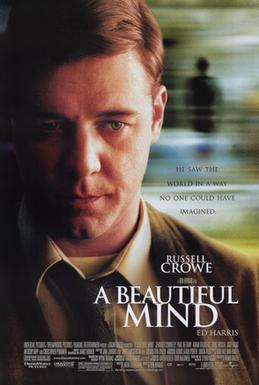
    The book as such is hard to finish, but there are some interesting parts not to be missed, especially the stories from world war, movie references (The Beautiful Mind, for example), and other real-life examples. The definitions of various game theory constructs eg. zero sum game, dominant strategy, Nash equilibrium etc. ) are well explained, until they loose you by going deep into the mathematics.

    Yet, there is more to unpack from this book. It says at one point, “All of us are strategists. It is better to be a good one, than a bad one”.

    That sounds to me a practical, if not a beautiful mindset.

  • A page from a book is more than that

    I notice my family, friends and acquaintances, not reading books.

    Some of them don’t have time in their lives right now, to dedicate an afternoon to even begin to read from a book they bought many years ago. This blog is not for them.

    A few don’t like to read books, they tell me. They have apparently lost interest in the written word. I am writing this piece, directly looking at them. Yes, I know who you are.

    I am kidding. I promise, I won’t preach why you should read. Nor would I prescribe a bunch of books on this last day of the year. I am kidding again.

    This is more about two moments from my 2021 trip around the sun. One acted as an anchor, giving me a sense of what I loved doing, and another that brought out the force in me, and gave direction.

    The Greeks again

    In February this year, on a lazy Saturday afternoon, I saw a tweet by a speech consultant @JohnfBowe. His article explained how two thousand years ago, the Greeks figured out that public speaking – the art of rhetoric – is a foundational skill to be acquired by everyone. Yeah, for once, it is not all about philosophy when it comes to the ancients.

    I ended up buying his book. It begins with the story of his cousin whose life takes a dramatic turn after joining Toastmasters. The guy never left basement until he was fifty nine years old, but soon got married, and overcame shyness (not necessarily in that order), helped by the world’s largest organisation devoted to the art of public speaking.

    John’s book made me reflect on the way I do presentations. Content is king, they say. I no longer start my preparations researching for what to include. The recipient(s) of the message take centre stage, more than the message itself. Audience is king.

    I reached out to the nearest club in Canberra. I wasn’t shy, but curious. I was welcomed into the Woden Valley Toastmasters club as a guest, a pivotal moment for me this year. I soon became a member, learning how to talk more clearly, persuasively but mainly, to keep the focus on my audience, what would be valuable to them. And to ramble less.

    Incidentally, around the same time in March, I got an opportunity to present SAP’s product strategy at a customer’s town hall meeting addressing roughly 150 members of their IT team. I remember spending more time on the question: What do I want them to think and feel, when I finish talking.

    A random tweet guided me to the book about ancient Greeks, eventually taking me to the Toastmasters, on my way to a successfully delivered talk.

    Winning is the (only) way

    Later in July, I faced a sudden bout of confusion and uncertainty about the way my role was perceived at work.

    One book brought back the fighter in me. It wasn’t a random tweet this time, but a slice of podcast conversation with the NBA star Chris Bosh talking about a book that shaped his thinking: The way and the power – Secrets of Japanese Strategy. Its about how a samurai master deals with confusion and uncertainty; one who controls his mind. One who would not lose. I ordered it immediately.

    I can’t say much more. But reading a couple of chapters, it felt as if I had flipped a switch in my mind. I woke up one morning and decided to win. Not merely adapt or survive or manage a situation. To win.

    You want the whole meal, not juice

    Why bother with a book these days, if one can acquire such insights through tweets and podcasts? I sense, reading a book – even skimming through a few pages – is way different than trying to grasp ideas distilled by someone else – a secondary process. It is the difference between eating a wholesome meal and drinking a juiced up version.

    A book could change the way you think about this world. Your world.

    Three sixty five days from now, on another new year eve, I will want to hear from you about the pages and words that influenced you.
    For the ones in my cohort too busy to read: One page consumes three minutes out of one thousand four hundred and forty minutes in a day. A typical book has three hundred pages.

    I rest my case.

  • Checkmate, Stress!

    Remember that weird state of your mind when you woke up many years ago, totally unprepared for a test? Or while suffering through an impossible and never-ending project that had a huge bearing on your career. And what Federer might have dealt with as he was clutching at straws facing a seventh match point at the Australian Open last month (you might say, his wife Mirka was more at pain, with her hands clasped and eyes closed in a quiet prayer).

    Stress is a bad word. It is so vague, it means everything and nothing at the same time. Im no expert in psychology and have no intention to write a “how to beat stress” blog. I thought of narrating a few personal insights and a lot of borrowed learnings that helped me deal with this beast.

    When i picked up Mind Master – Winning Lessons from a Champion’s Life, i expected World Chess champion Viswanathan Anand’s book to contain sophisticated mental strategies for career growth. The now fifty year old master was once a child prodigy. I am only half way though the fascinating book, but Anand opens up like a friendly mentor. He portrays his vulnerable self when facing a daunting opponent like Gary Kasparov and appears an emotional wreck after a jolting defeat. Beyond his insights on risk taking, persevering towards goals, contextual memory and developing curiosity, i loved the emotional human behind the intellectual genius.

    There are solid lessons from the seemingly quirky, nail-biting warrior’s many duels – most, against his own mind.

    Dealing with Emotions and being fearless

    He talks about how emotions come in the way of clear thinking and decision making. Especially, “After a defeat, it pays to completely change my surroundings, find something new and compelling”. “The mind only recovers emotionally when it can replace an old memory with a new, more pleasant one.”

    He then narrates how different Kasparov was in dealing with a similar situation. The all time great champion was struggling one day in 1987 during his match against Karpov. “Instead of striking his head against the washboard over his predicament, Kasparov spent the entire night playing cards”. The next day, he woke up late, had a lazy lunch and told himself he was just going to keep going.

    As i read this, i got reminded of a similar story narrated by the Sri Lankan cricket captain Arjuna Ranatunga, about his team’s state of mind on the eve of the 1996 world cup finals against the mighty Australians. His team were the underdogs but had played a fearless brand of cricket all through the tournament. Staying in the same hotel in Lahore along with their opponents, he noticed the Australian team having a quiet dinner, while his troops were no were to be seen. When he later found many of them shopping carpets and sarees for their wives, he comforted himself, the cup was theirs: A team so relaxed, cannot lose. And they didn’t.

    Around a year before this match, i was faced with an anxiety attack on the eve of my year 12 chemistry exam. I was hoping to refresh my memory of all things chemistry during the two day break after the physics test. I had to get close to 200/200 in each of physics, chemistry and maths, to have any chance to getting into the tier-1 engineering college in South India.

    I had toiled the whole year on physics, but i messed up a twelve-marks question. Returning home, i felt defeated even as my dad tried to calm me down. The two days before the chemistry test felt like eternity. After spending forty of the forty eight hours self-loathing, fretting and fuming, the fear of failure made me hopeless. But with just a night to pass before the test, i suddenly felt better since i had lost already. I told myself, “I won’t get into the university i yearned for. Let me just have some fun”. I still remember, i was one of the very few who had a smile in the face before, during and after that three hour test.

    Viswanathan Anand too explains how his occasional shift in attitude – embracing fearlessness – landed him spectacular victories. “i have played my most inspired games when my enthusiasm for the sport resurfaced, without the bindings of titles or wins or ratings”…”to play a good game”..”excited about learning something new”.

    My battle was no way comparable to his. Still, when the results came two months after my exams, i shocked myself and my chemistry teacher, scoring a perfect 200/200 – a tough feat at that time, especially in my school.

    From Checkmating to Note taking

    Anand’s suggestion in taking notes as a means to deal with emotions and stress is another revelation. “putting down my observations right after a defeat when the pain was raw and the sting was fresh, I stumbled upon the solutions I had seen but didn’t act upon or the ones I had overlooked.”

    I am no big achiever yet, but i can vouch for this. For the last couple of years, i have been diligently writing down notes in a daily (sometimes, hourly) journal. I make a note of what’s in my mind, what i’m thinking, more importantly, the raw emotion at that moment – feeling fearful, inadequate, blessed, clueless, bored etc.

    Poring over these notes – a treasure trove – i have become a lot more objective, grounded and relaxed. (many of my blogs were born out of those).

    As Anand says about his 40+ years of notes, “without that”…”my experience [is] almost incomplete.”

    Second Brain

    A zillion things go on in our mind at any moment. Offloading much of that – thoughts, ideas, shopping lists, pending tasks – to another system is a stress buster. For the uninitiated, David Allen’s book/methodology Getting things Done is a great place to start. Along the way, i discovered, Tiago Forte’s Building the Second Brain (BASB) techniques quite useful. If you are looking for a contemporary note taking app/tool, i suggest Roam Research – this has been a game changer for me.

    Don’ts

    A few physical techniques like simple exercises, breathing techniques etc, can be transformative no doubt (eg. Paul Taylor’s Mind Body Performance Institute), and i’m not even venturing into the possibilities in the spiritual realm.

    For me, confronting the raw emotion face to face has been an effective way to conquer it.

    One thing i learnt not to do when your loved ones are feeling it, is to suggest, “please don’t be stressed”.

    It is as useless as saying, “please don’t have a headache”.