Tag: personality

  • The Karate Lies

    “Say two statements to describe yourself: a truth and a lie. Let the team guess the right one”. A silly but surprisingly effective way to spend a quarter of an hour of an otherwise boring day of sales planning sessions. It was also a chance to get a new perspective about colleagues that we assume to know well. Everyone tried to be clever; a few stated one attribute about themselves super quick while hesitating or scratching the head for the next, which gave them away.

    At my turn, I claimed two achievements: 1) represented my college Tennis team 2) hold brown belt in Karate.

    No one was right about me. Having to assess the lazy, lean, slouching and unimposing fellow, they all could be forgiven for not associating me with martial arts.

    What was your guess ?

    Now, I don’t remember any of the karate stances or techniques, and I for sure cannot punch without hurting myself.

    My father introduced the 8 year old me to karate. He just didn’t enrol me to a class; he would talk to the karate master frequently; watch me train, as he sat on the side-lines. He would attend every belt ceremony. While he encouraged me to be physically fit – he had built up a few muscles himself – i was a lazy kid looking for excuses. I did well academically and insisted holding a book rather than dumbbells and plates (he had custom-built for me). If only I had 10% of his passion.

    Still, I kept up with the karate lessons for the next few years. Getting up at 5:30 am thrice a week, cycling through the dark alleys to the next suburb, I would meet ten more of my sleepish class mates and our no-nonsense karate master smiling at us. He insisted on warming up – made us do knuckle push ups on a hard, sand surface. The actual karate stances (katas) will be taught much later. He emphasised learning discipline, mind control and self-defence, before acquiring skills to flex, punch and kick. “Be alert, block and defend. You will do just fine”.

    Occasionally, he will organise sparring – fighting an opponent – and I would be the worst of the class. I did well on theory and trembled on a real combat. I survived quite a lot of those sparrings by employing my defence techniques (A little bruise here and there wouldn’t count).

    I once had to face-off against a friend – a bulkier boy who happened to be my mother’s colleague’s son. After the fight, as we both walked back home, my mother spotted a bulge on his lips and wondered if he had hit his face against a wall or something (she obviously ruled out the possibility of me ever hitting another human being). “It was a punch”, was my friend’s reply, a clever usage of passive voice. My mother appeared confused as she took that word for a similar-sounding Tamil term “panju” (cotton). I then narrated to her: As he began attacking, I got nervous, crossed my hands and closed my eyes. Perhaps he lost balance and tripped. His face fell onto my hands, landing his tender lips on my tight fist.

    My next “fight” was a real one. During my year 6, a close friend Velan changed character, began teasing and bullying me as he joined a new bunch of mates. He was tiny but challenged me for a real man-to-man fight that evening. I was half thrilled and embarrassed to face-off against my own friend. I was scared too. After school, walking up to the soccer goal post, we looked at each other taking positions. By then, a crowd had formed to witness the spectacle of two bony structures about to create collateral damage.

    Velan punched. I moved my limbs in the air, more on impulse. Next thing I noticed, everyone running towards a crying Velan who had blood on his face. I cried much louder – maybe due to the impending loss of friendship, and also the tasty paruppu vada (fritters) his mom serves.

    These minor victories were exceptions on an otherwise vulnerable bunch of early-teen years. Feeling physically weak/inferior was part of growing up, especially being amongst intimidating (and bullying) class mates. Karate didn’t help achieve any level playing field with them – I stopped mentioning, to avoid being a laughing stock. Even during the many friendly encounters with my younger sister, I remember being easily out-manoeuvred. She never did any karate and had no fear.

    Meanwhile, I quickly progressed from white, to an orange and a green, then blue, a purple and eventually the brown belt. More self-doubt crept in. I looked myself in the mirror, imagining how it would feel to be ridiculed by one and all if I donned a black belt. While dad insisted to keep going, an unfortunate leg injury from a slightly-more-than-minor accident made me miss some classes. That was the excuse I needed to quit, and I never went back to the karate class.

    My father was quite disappointed. My karate master too caught up with me once during a neighbourhood event. I evaded all their attempts and buried my face in books.

    As I kept focussing on my studies and then, career, I have forgotten the karate kid in me. While my friends pumped iron, ran miles and bent their bones in yoga postures, I didn’t bother to move a muscle. I hit rock-bottom during my early twenties. Once with a group of us – boys (men?) teasing each other, I made a fool of myself announcing my brown belt credentials. One of the guys asked me to show if I had still got it – offering to receive my kicks on his body. The more I pushed and slapped with my slender legs, the louder he broke down laughing, as if he was being tickled. Worse, he was the thinnest of us all.

    I did win the truth/lie test at office the other day, but it will certainly be a lie if I claim any karate accomplishment. After all, when confronted, I have had more more losses, hardly any wins and occasional draws.

    As I calm down, I do realise that the real truth is somewhere in between. Karate was not all a losing cause.

    A few years ago, I caught myself in a road rage incident in Bangalore. My car hit an auto-rickshaw while I took a narrow turn, and it was all my fault. With my wife and kid in the rear seat, I got nervous as the thug-like driver ran towards me, signalling at me to lower the window panes. He hurled a few expletives and began to throw punches at my face. Six or seven hits, if I remember correct. My heart was racing, the girls were screaming, but I noticed him getting frustrated.

    All his hits were misses. Turns out, my forearms crossed up and blocked each one of those. My karate master must have been proud.
  • Bookshelf tales – the first few pages

    Bookshelf tales – the first few pages

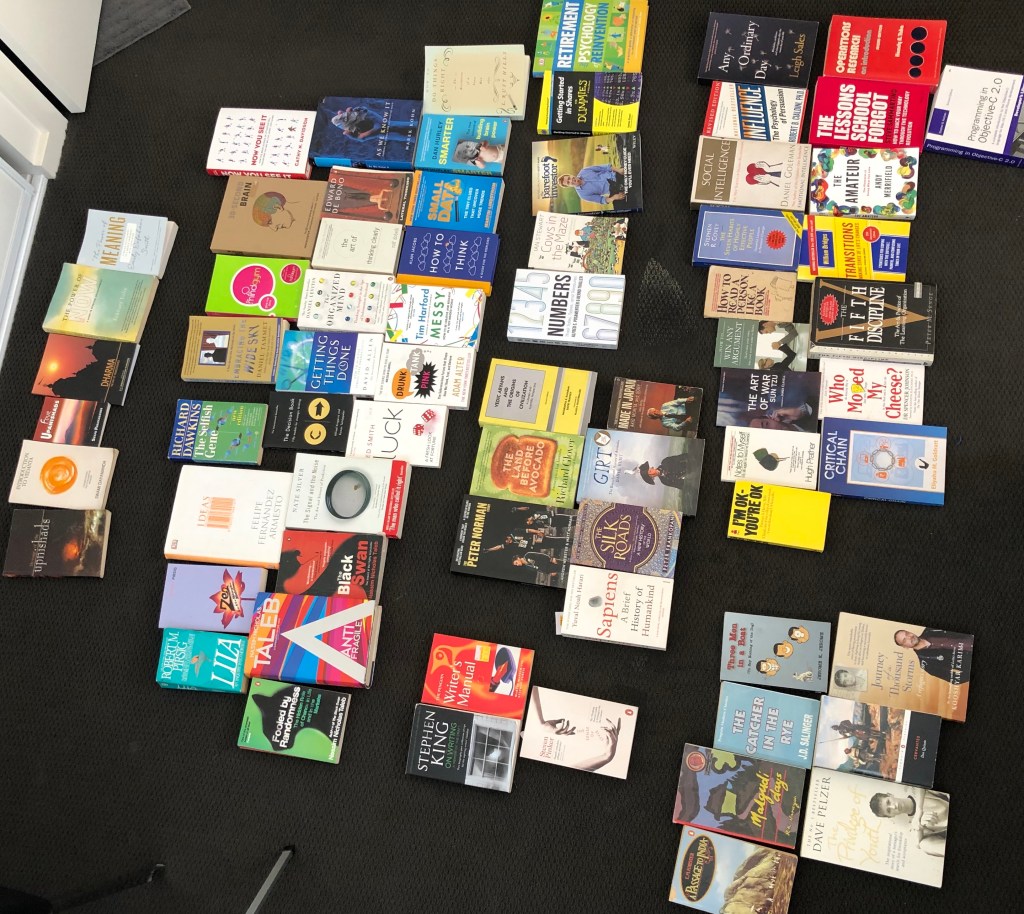
    A friend asked me if I could recommend some of the interesting books I have read over the years. I used that chance to finish an activity I had been running away from – to sort and categorise the books in my shelf. After a nice breakfast on the new year’s eve, I spread all books down on the floor. Looking over them, I wondered how I ended up with such a wide collection of bound pages containing many others’ thoughts and ideas, that I must have inhaled via tens of thousands of words over many a quiet afternoon. Some of these books were gifted to me; a few, I bought on friends’ recommendation; a lot were picked up at random, while waiting to board a train or a flight. Many of the pages are still to be read. A few, to be re-read.

    A couple of hours later, I ended up with a much cleaner bookshelf. And with a dust-triggered-repeated-sneezing-and-running-nose. Also with a mind-refresh of some hilarious but life-defining experiences associated with these books. I share some of these stories as a blog series, starting with this one.

    These books helped me once hide my insecurities and inferiority complex, pass a job interview, to converse better with strangers and to broaden my thinking. Also, to brag about stuff from time to time. More importantly, they made me = me++.

    Urgent: improve your personality. Interviews are coming!

    I look back at myself – Ramanathan of 1998. An eager but shy university student in Coimbatore, anxious about the upcoming season of job interviews. I was shaping up to be good engineering graduate alright, but I struggled to finish speaking a sentence in English – especially when standing in front of my class. We were expecting a couple of IT companies to visit our college to hire final-year graduates. They were going to test us on our math, analytical and verbal skills. They might also check if we were good at engineering. Most of us were worried about getting exposed on our (lack of) communication skills.

    As part of preparations, a bunch of enthusiastic class mates got together to organise group discussions. Candidates are seated in a group and given a topic to talk about. They are judged on what they spoke, but also the way they influenced the group’s final decision on the topic. While my smarter companions debated complex topics like Kyoto protocol, democracy, impact of foreign aid, etc. with ease, I would find myself blabbering nervously. I didn’t just struggle for words. I would often mis-pronounce even when I fished out a word for the occasion. Often, I didn’t have much to say, as I felt out of my depth on many worldly matters.

    It was clear. The “test” was not just going to be about one’s measure of arithmetic, vocabulary or ideas. It was a judgement on the whole personality. And here I was, a clumsy, slouching lean fellow who wouldn’t shave very often, bite nails when nervous. That was most of the time.

    Once I was in an activity where each one had to speak on any topic for two minutes. The group would take notes and provide feedback for improvement. I chose an easy topic: Time Management. I had made notes while I waited for my turn and when I spoke, I was able to explain the various techniques like planning, keeping a sense of time etc. They said I spoke reasonably well but were brutal in their assessment of my appearance: I was dibbling my finger, didn’t look at the audience and they also pointed out that I overshot my allotted time by three minutes as I laboured on about time management.

    My friends shared some tips and tricks, and alerted me about my annoying habits. For instance, it took a whole month of practicing to avoid retorting with “aaaah?” or “whaat?” instead of “Pardon, me?”.

    A class mate suggested that we organise a Personality Training Session for the whole class and gave me a reference of Mr. Suresh Punjabi, an expert who (even this day) conducts trainings for students in Coimbatore. We decided to try this first on our second year juniors. I got permission from our shy and equally nervous professor – he possessed enough weirdness to qualify as typical nutty-professor (would write a separate blog series on him one day). When Mr. Punjabi arrived at our college, I observed that he didn’t wear a turban. I also observed my professor being more eager to introduce him to our newly joined Principal. I wasn’t sure. I had not met this new principal yet and was pretty sure that would be the case with my professor too.

    Soon, we both welcomed our guest and ushered him into our principal’s room. The four of us were standing but no one said anything for a good five minutes, each waiting for some one else to break the silence. I assumed the principal waited for either me or the professor to tell him who the stranger is. Mr. Punjabi looked at me. I was looking at my professor who appeared shy, nervous and embarrassed at the sudden attention that he created for himself. With a quiet voice, still facing down, he threw these words towards the principal, pointing his finger roughly towards a direction between me and our esteemed guest. “Sir, please meet Mr. Suresh Punjabi”. The principal looked at me and shook my hand, “Thanks for coming, Mr. Punjabi”.

    Eventually, when we let him begin his session in the classroom, Mr. Punjabi took us through some of the basics of communication, appearance, manners and stuff. He also emphasised on learning how to wear a tie. Conversing with him on the way back, I felt more assured about myself. I vowed to never let the principal-room-situation occur again: to never be that invisible. To never stand there just blinking and being tentative.

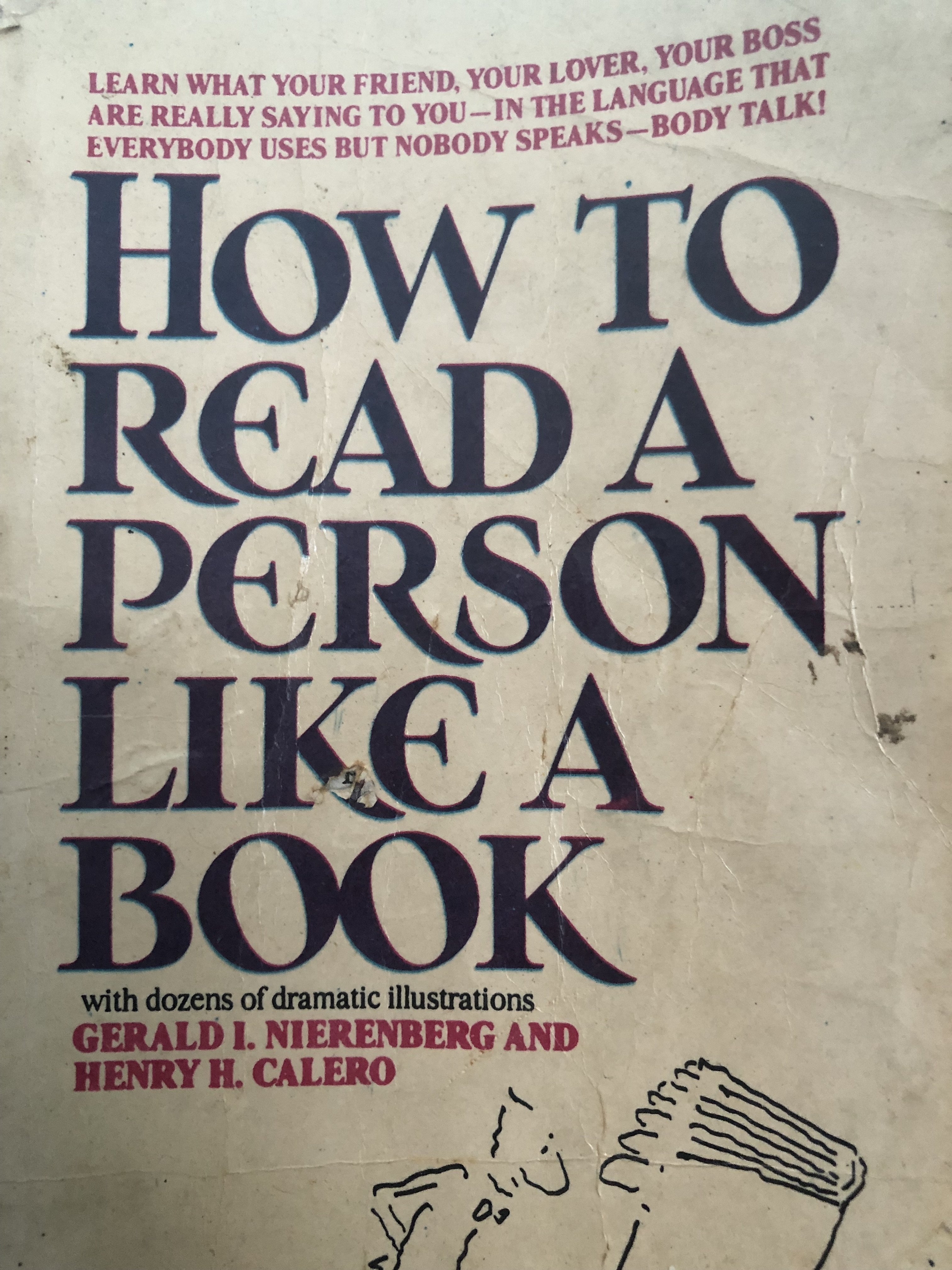
    Around the same time, I found an interesting book in my father’s bookshelf that usually had a collection of Dale Carnegie’s books and old copies of Readers Digest. How to Read a Person like a Book, was all about non verbal communication, body language – and the mastery of it. It had all the answers for me.

    img_1447

    Twenty years on, I still preserve this book. Yeah, the pages are rugged but the lessons are fresh, and still being learnt. Few years ago, when I switched roles from being in product development, to more of customer-facing project management, I paid the price for forgetting some of these lessons.

    While at a customer site, representing a group of engineers, I was annoyed by the customer who mistook my colleague as the project lead, talking to him most of the time, while I was left to wait for emails. It took a while to figure out: my colleague would always present himself in a suit and a tie, while I would often land in a semi-formal attire with a casual demeanour. That was a game-changer moment for me.

    But in 1998, this book enabled me to punch above my weight.

    When my class mates arranged for another round of preparatory group discussion, I felt I would fare better. Partly because the topic sounded easier, Also, by then, I had avoided keeping my hands nervously in my pocket when speaking; I no longer feared making eye-contact with class mates and didn’t bother if they faced me with a smirk. I slowly began opening up.

    I remember the feedback from the class mate – the designated judge that day. “Your gestures were awesome. You listened very well, often nodding your head positively, encouraging your opponents to speak. You didn’t interrupt anyone but, you didn’t say anything till the end”.