Category: Philosophy

  • A beautiful mindset

    I have struggled with the word strategy all through my career. No, I haven’t struggled to make a plan or define a logical sequence of activities, but this whole strategising thing is something else that bothered me. How do you successfully get through to the other side of a challenging project to deliver, or an uncertain future for the product and team, or an unexpected change in career? Dealing with, and winning at these require more than grit or luck. Pure logic doesn’t help beyond a point. I have often heard from colleagues that life resembles a chess game, one to be mastered.

    I am bad at chess.

    My other problem is with the word, Art. There is an art for anything these days: “Art of speaking..”, “Art of writing…”, “Art of winning…” and of course, the ultimate “Art of living”. All my life, I was more into science and math, and I was particularly bad at art.

    Bad at art, and worse at chess, I have no hope then.

    I am good with reading books however, and to my pleasant surprise I landed on this book recently that carried both these words in its title: The Art of Strategy, A Game Theorist’s Guide to Success in Business and Life.

    One of the authors of this book is a professor in the US but of Indian origin, which made me think: after all, wasn’t the Indian civilisation that gave birth to Chaturanga, the predecessor of the modern chess game? Even the famous epic Mahabharatha revolves around a game of dice gone wrong for the Pandavas. India is also the place of Chanakya the philosopher-guru who authored Artha-Shastra – a treatise similar to the more famous Art of War.

    The definition of strategic thinking was very helpful: “the art of outdoing an adversary, knowing that the adversary is trying to do the same to you”, “art of convincing others, and even yourself, to do what you say.”, “art of putting yourself in others” shoes so as to predict and influence what they will do.

    Out of the many strategies and approaches, the common theme for me was the element of surprise, as a winning ingredient in any strategy, especially dealing with bullies. The authors explain the best strategy to confront a powerful and intimidating bully at school, at work, or even a dictator: a sudden, visible, unexpected act of defiance by the collective.
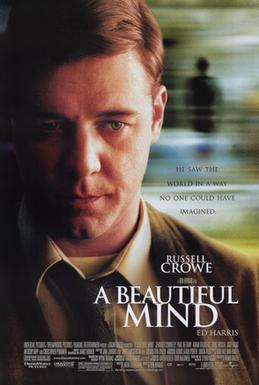
    The book as such is hard to finish, but there are some interesting parts not to be missed, especially the stories from world war, movie references (The Beautiful Mind, for example), and other real-life examples. The definitions of various game theory constructs eg. zero sum game, dominant strategy, Nash equilibrium etc. ) are well explained, until they loose you by going deep into the mathematics.

    Yet, there is more to unpack from this book. It says at one point, “All of us are strategists. It is better to be a good one, than a bad one”.

    That sounds to me a practical, if not a beautiful mindset.
  • Blank

    Blank

    I couldn’t write a blog last month. I didn’t want to. I didn’t want to write one of those self-deprecating takes on a life experience and fill it with wise-cracks. I was struggling for ideas.

    I was actually struggling for words to describe the state of my mind.

    Situation in India

    Everyone seems impacted by COVID, not just counting the unfortunate ones invaded by the virus. The visuals on TV last month were striking – ailing men and women standing in long queues to secure hospital beds, oxygen cylinders or anti-virals. Haunting scenes of bodies that lay queued up in front of a crematorium. Social media, especially twitter was abuzz with cries for help, but in equal measure, with quick and life-saving responses from strangers. The state of my mind tasted like a cocktail of despair and hope. 

    Heavenly prison

    As I talked to my parents, friends, uncles, cousins, ex-colleagues, almost anyone from the land that birthed me, I tried to listen more, but found nothing helpful to offer. My wishful words sounded empty. I watched all this nervously from a safe distance, within the safe comforts of a western country that has a much lower population, a better system, and lucky. Also, cocky. Australia conveniently closed its borders and threatened – with a jail term and a ridiculous fine – anyone trying to come back to the country. The state of mind : angry and helpless.

    Help?

    I am one of the 18 million Indian diaspora spread around the world. What can one individual do, after all ? Of course, I try to support my immediate family and friends in any which way I can – mostly monetarily, given travel restrictions.

    What else could one offer, beyond money and empty words ? I saw Indian-origin doctors offering virtual services to ailing patients in India. I saw millionaires sending flights-full of useful materials. I read about corporates vaccinating their employees. I came across inspiring stories of nameless individuals helping out strangers in dire need.

    I realised then, my craft as a software engineer is not directly useful to my people at the moment. Or maybe i don’t know what to do with my skills – beyond earning a monthly salary.

    What can i do or make?

    Eventually, I joined a small group of the Indian community here in Canberra, who organised a South Indian vegetarian food fair in the temple, to collect funds for a hospital in Coimbatore. We all prepared idlis at home and sold it at the temple. A decent collection resulted that should be helpful. Well, something necessary if not sufficient. As I did my bit around the kitchen, I wondered if this was all I could do.

    The state of mind: feeling inadequate.

    Coping strategies

    Though my family is largely unscathed (fingers crossed), my parents are yet to be vaccinated. I fear we are sitting on a time bomb. Meanwhile, life goes on; work consumes my days, leaving the night wide open for dreadful anxiety. Often in the middle of the night I wake up to check whatasapp, hoping not to catch a text or a missed call.

    When no actions are possible, I turn to distractions. Movies, sports, trivial news in social media, celebrities, anything. And books, especially on philosophy.

    Kural and Senaca

    I turned to Thirukkural – the Tamil classic text from 300 BCE, written by an unknown author (we call him Thiruvalluvar) who has written 1330 non-religious yet sacred verses or Kurals (couplets), seven words each. These kurals are like morals and commandments covering three key aspects of life: virtue, wealth and love.

    There are 10 kurals that cover how to deal with sorrow and despair, each offering a unique coping strategy. A few explain the nature of sorrow and suggest being realistic. A couple of kurals advise us to defend against the incoming trouble. But, a few kurals insist fighting back: trouble the trouble to make it run away, or something of that sort. But this kural below has the best strategy of it all, and I remember being surprised when I first learnt it:

    இடுக்கண் வருங்கால் நகுக அதனை

    அடுத்தூர்வது அஃதொப்ப தில்.

    If troubles come, laugh; there is nothing like that, to press upon and drive away sorrow. (Translation, courtesy valaitamil.com)

    Laughter is indeed the best medicine. But, the state of my mind ? Not funny.

    The Stoic’s take

    In the end, I got a better medicine from the greek stoic philosopher, Seneca, who is now getting more popular after 2000 years.

    Light griefs do speak; while

    Sorrow’s tongue is bound.

    I figured, my mind was at a state where no words or thoughts could spring.

    Blank.

  • Recapturing the Saturday 4pm zone

    If there was an election to choose the best time of the week, my vote is for Saturday. Particularly, i will tick the box : 4pm Saturday afternoon.

    There is competition. Sunday is popular and highly rated. It prides itself as the first day of the week, and a holiday. It is precious – and that, paradoxically, is its downside. The pressure to do something relaxing, while being constantly reminded of the slippage of time, that drags us towards yet another week that is still to be planned.

    Monday stands no chance whatsoever – infamous for its morning blues. Historically, it hasn’t proven to get better during the day, as one bears the brunt of many mails, calls, actions and the sudden realisation: should have worked during the weekend to catch up.

    Tuesday is the day people wake up to the reality of the week. So, it won’t win as there is no time for frivolous elections.

    Some of us are mentally dead by the time we scrape through Wednesday. It is nevertheless a decent contender for the vote, as I have noticed a lot of people pre-maturely celebrating its evening as the beginning-of-the-end-of-the-week.

    Thursday is usually a serious day, when the managers chase their teams to see what could be salvaged for the week. The last chance to “begin” something, as it would take at least two days to do an acceptably shoddy job of what was originally estimated to be a week’s effort. As the philosopher of our times Alain de Botton says, “Work finally begins when the fear of doing nothing exceeds the fear of doing it badly.”

    Friday is like a celebrity who simply expects everyone to vote for her, being famous for the TGIF theme (Thank God its Friday!). She doesn’t realise the truth: people don’t really thank God for giving them a Friday; they are just relieved that the week is soon over.

    What is special about a Saturday? At one end, we have the morning, which begins with a “hangover” of the arduous week – the unfinished business still lingering – followed by weekend chores and errands. Saturday nights at the other end, have a special significance in the popular culture – a time set aside for entertainment, a chance to catch up with friends. All of this require planning, scheduling, coordination. Effort. But there is something about an undemanding, effortless Saturday afternoon.

    Illustration by Sowmya Ramanathan

    It is that period, when it would be too late to finish anything pending for the current week, but too early to worry about the upcoming week. A golden, yet fuzzy time space that overlaps the boundary between the weeks. A land without rules, ruler or expectations. A zone to indulge on a meaningless pursuit where no one keeps track of your time. No one cares.

    I have cherished the memories of many such blissful Saturday afternoons of my childhood days (late 80’s). Life was simple. Less TV, no social media, and there was such a thing called boredom. A scene from a typical Saturday 4pm: My mother eager to prepare the perfect afternoon snack, enthused by her weekend wish coming true – being taken out for shopping earlier in the day. My younger sister quarrelling with me over trivial things. Me being physically outmanoeuvred by her yet again; we end up disrupting my dad from his well-earned nap after a gruelling work-week. The unimpressed grandma admonishing us for making a fuss. All of that brought to a peaceful end by the spattering sound of the spicy bajji and the smell of filter coffee. The nourishment for not just the body.

    Growing up, the sweet Saturday afternoon zone got shrinking. Weekend homework increased, priorities changed, we all got busy. Still, those afternoons were a medicine, a recharger of sorts, where time stood still for a brief while, preparing us for the countless weeks ahead. It was all about leisure, less focus on doing anything specific and more about just being together, often spent talking about a random, point-less matter that appears meaningful when I look back.

    2020 was a tough year on many respects. Nevertheless, it was a blessing in disguise. After many years, i sense to have re-acquired this “zone”. The recent year-end break was a great time for me, my wife and our daughter to do what the younger-me did with my family during those Saturday afternoons: be together and do nothing in particular.

    I did something after all. Picked up a few of the books that were staring at me for a while. One in particular blends with this Saturday 4pm mood. Work: A History of How We Spend Our Time, by James Suzman is all about how we humans have completely misunderstood what Work means, missing out on what our (hunter-gatherer) ancestors had an abundance of: Leisure.

    Stepping into 2021, i promised myself to dwell more often on this Saturday 4pm zone that i voted for.

    What is your vote ?

  • Press Any Key to Continue…

    Press Any Key to Continue…

    My boss put two questions in front of me recently, during the half-yearly review meeting. “What is the aspect of the job that gives you joy” – a nice, ego-boosting leading question that lead to a delightful conversation.

    Her next question stumped me: “What is going to be your pet-project?”. “The one activity you could do on your own, during free time. Something you could come home to, when you have had an especially bad day”.

    I drew a blank.

    Homecoming

    This question is significant today, as we perceive time, work and life very differently than just a few months ago. During the pre-COVID era(?), a knowledge worker like me would have separated work and life – at least physically, straddling across office and home each day. We used to talk about work-life balance. These days, there is not much of a discussion about balance. It’s all a blur at the moment.

    A good blur, at least for me. I no longer need to get up worrying about ironing the shirt or to drive to work to be in time for the first meeting of the day. Time is aplenty. (My wife isn’t too excited though – having to come home each day only to see unwashed stained tea cups – one on the table, two lying on the floor and one missing).

    Sorry, I digress. The point is, a different sort of homecoming is necessary to keep our sanity.

    But, a pet-project ? You see, this phrase has two words that sound dangerous to the lazy-me: a pet needs maintenance, while a project needs diligent work towards completion.

    Spend, Manage or Invest ?

    On a serious note, what would i do with a bit of extra time ? Time = Money, they say. There was this crude poster i saw recently that compared how the poor, middle-class and rich deal with money:

    – the ones who have less, SPEND.

    – the ones who have moderate amount, MANAGE.

    – the ones who have excess, INVEST.

    How do i invest this little excess time? Typically i am bored, i look for interesting things in twitter (will write a blog one day, about the gems i discovered by following a few interesting people in twitter during this year), read a bit of philosophy/self-help books, watch movies (these days i’m into Turkish rom-coms). I also play a bit of amateur sports. However, i’m not serious about any of these things. I dabble.

    Making Choices

    To be serious about a pet-project, i have to generate a list of options, make a choice, invest time and energy, report on its progress, and show some result.

    Choice! If i have a, b, c, and d as choices, it is mainly a question of what appeals to me the most. What if there is something outside this list that suits me better? How do i know what i don’t know ?

    One would argue, it is not easy to make decisions even with clearly defined, discrete choices. The red or the blue pill, as Morpheus asks Neo in The Matrix.

    When my daughter and my nephew were toddlers, they used to fight for the best toy. Once, faced with a red and a green plastic trumpet, the kids couldn’t come to an agreement who gets what. It ended like this: my girl grabbed both the trumpets and offered the guy to choose one of those. As soon as he decided on the green one, she knew exactly what she liked. She snatched that very green trumpet from the hands of the baffled boy, and threw the red one to him.

    What to look for ?

    Life is easier as a child. I am more indecisive than ever before and struggling to answer a simple question, with no clear list of options, nor a play-mate to try out a decision tree.

    Perhaps this question should be framed as: what would you “work” on, given unlimited time & resources without any constraint whatsoever?

    I looked around for some quick inspiration – maybe mentors could help? Or the so-called thought leaders – like Paul Graham – who says in his blog, What Doesn’t Seem Like Work, “The stranger your tastes seem to other people, the stronger evidence they probably are of what you should do.” He ends by asking, “What seems like work to other people that doesn’t seem like work to you?”

    Unbounded and Unflattened

    When i look back at my life so far, someone or something has always driven me somewhere. A rank to achieve, a course to finish, a job to get, a project to complete, a step to climb in the corporate ladder, a problem to solve for a customer, etc. Even when i indulged in creative pursuits, there had always been constraints or a boundary.

    I am not sure how to wrest myself out of the set path – even if it is just for a hobby. Something different and random but not trivial; a pursuit that delivers pleasure but no expectation (i certainly don’t want additional responsibility and having to justify to anyone – including my nice and well-meaning manager, who surely will be reading this blog with a chuckle).

    Anything, that amounts to something in the end.

    Anything

    This reminded me of a story about Compaq computers: In the 1980s, their customer support team had to spend a lot of time explaining first-time computer users, who called up to ask “Where is the Any key in my keyboard?”. The users were confused by the message in the computer monitor that instructed them to “Press Any Key to Continue”.

    Where is my “any” key ?

  • Bookshelf tales – Hard landing on a Tipping point

    (This is part 2 of my Bookshelf tales. For part 1, click this link).

    All the preparations didn’t go in vain. I passed the interview and received my first job offer. With a lot of excitement, I moved to a new city to begin my career with Baan (a great company) along with three of my classmates and forty others in that batch (a great company).

    The day we landed, I noticed my friend unpacking more books than clothes from his luggage. He filled out half the wardrobe shelf with his books. Seven Habits of Highly effective People was one of the first books I borrowed from him. I remember feeling inadequate at that moment – after having ignored a friend’s dad’s advice before I left home. He was reminiscing on his bachelor days in Hyderabad many years ago and suggested that I avoid eating out and to do a lot of reading. I perhaps paid more attention to be one own’s cook than to pick up a book.

    Eventually, I began collecting (and reading) some books. I write about three of those, that provide colour and context to my first four years.

    The Goal” (…and how my trainer eliminated the job of a canteen clerk)

    “What is the goal of a company?”. Mr. Karan Rastogi, the trainer asked us as he began unravelling the concepts of Enterprise Resource Planning (ERP). Most of the answers were around producing goods that are useful to society or something in those lines. Mr. Rastogi clarified however, the main goal of any enterprise was to make money.  To be accurate, to create value – for shareholders, employees, and the society at large. It was all going over my head anyway. To make it easier for us, he narrated a story from his management consulting days.

    He was once asked by a major manufacturing company in the northern part of India to identify ways to reduce cost of operations. He learnt that all employees were provided subsidised food and tea at their canteen. A clerk was employed to manage tokens and the cash register. Initially, the workers were quite happy – being able to buy a meal for less than 50% of the cost outside. Soon there were complaints about the quality of food and the long queues in front of the billing counter. Mr. Rastogi initially performed a lot of algorithmic calculations based on Operations Management but soon came to a simple conclusion: it is best to fire the clerk and eliminate his job function, and provide free meals. The loss of revenue was more than made up by the increased employee morale (when they pay nothing, they didn’t complain even when the food was terrible).

    He suggested that we read a novel by Eliyahu M. Goldratt: The Goal, which is rated as one of the top 25 books in Business Management. Read how the central character in the book learns complex concepts like Theory of Constraints, Bottlenecks etc, from real life experiences as he resurrects his career as a struggling Shopfloor Manager. In particular, I enjoyed the part where he goes on a mountain hike with his children and their friends, as they follow each other in a sequence on the way up. Hours later, he finds the last few kids arriving much later than others – due to a fat kid in the middle who slowed down everyone behind. With the insight: “A chain is only as strong as its weakest link”, he goes back to work and fixes his production chain, thereby reducing inventory and increasing profit, thereby keeping his job and getting back with his wife.

    The Tipping Point

    As I was browsing through a book shop, I picked up this book that was at the end of the shelf and about to fall. What an odd (but appropriate) title, I thought. Tipping Point. A tip is a point after all. And the author’s last name is Gladwell. Well, I didn’t regret buying it though. It introduced me to the world of social sciences, especially how influential ideas spread virally in a social network (long before the age of Facebook). And more importantly, to non-fiction books that are as gripping as novels.

    “The Power of now”

    A bit of hard landing occurred in the first job as I struggled to deal with expectations. It was much easier to shine as a topper in a class room but not so in the real world. I also had to deal with a literal hard landing.

    One morning, I found myself flat on a hard, newly laid tar road, thrown from my Yamaha RX 135 bike as I narrowly avoided colliding with a patient exiting from an eye hospital, riding his bicycle across the road (he was still carrying some bandages in his face). I had four seconds to respond and I thought I did well not to kill him, even when he unknowingly tried his best to come straight at me with a single eye.

    In an eerie sort of coincidence, I had bought this book “Power of Now” only a couple of weeks before. While I was recovering from a surgery to my broken wrist, I thought it wouldn’t a bad idea to dip into this book about mindfulness and stuff. I couldn’t resist wondering why this happened to me. What if I had joined my friend in his bike that day. What if I had paid more attention during those four seconds. Or maybe earlier.

    A colleague tried to assuage me, “in our roads, even if you are 100% careful, you are only 50% safe.” That made me laugh while still at pain. My uncle’s friend saw me reading this book and said, “Kid, you have many years to go before you indulge in philosophy stuff. You need to do earthly things and struggle in life first.”

    That rang a bell. A year later, I was married and it was many months before I touched any book, especially philosophical ones.

  • Philosophy lessons when waiting in a queue

    I watched my dad’s eyes as he took in the sights and (lack of) sounds of a new place (parents visiting us here on a short trip to Australia), as I took him out for a drive to a shopping mall, on the very day we landed. Later that day he remarked how well people were following the queue – whether one is driving on a busy road or waiting for the turn to pay. He was impressed by the absence of irritation or restlessness shown by the people waiting – and particularly the person at the counter who did not pay attention to any one else than the person in front.

    This resembles my own experience during my first trip abroad, to The Netherlands. I too noticed how everyone patiently waited for their turn at a doctor’s clinic, without any fuss, though being unwell.

    We get used to queues and waiting situations from the day we are born. There is an order and sequence to everything; At school and at home, we are taught to wait. However, when we are among a crowd of people wanting the same thing at the same time, the raging animal inside us tests our discipline and social manners.

    Manners were the last thing I worried about during my first near-death experience while waiting in a long queue at a movie hall, many years ago. With my cousins and friends I was thrilled initially, as we got permission to go by ourselves – and been given some money to spend. We decided to buy the cheapest ticket and had spent away the rest of the money, eating some junk. The queue was benign and orderly until when the ticket counter opened. There was a sudden rush behind us. Some strongly built and goon-like men were jostling us inside the closed corridor, which was covered on the one side with a brick wall and a steel fence on the other. My shoulders hurt – as I felt a leg clamped on me; one of my cousins screamed for help. There was no way out of that cramped space, and going back was most definitely not a viable option. We survived the stampede that day, and got our prize: a ticket to watch a fantastic movie.

    Key take-away: when people say they don’t quit or when they are called “finishers”, perhaps they didn’t have any other choice.

    I promised some philosophy in the title and here it is, but you will encounter some mathematics first.

    When you see two queues with the same number of people, you hope to choose the one which gets you faster. How many times have you been left frustrated being stuck in the “wrong” queue? Don’t stress. Murphy’s law states, “If something can go wrong, it will”. Extending that to queueing, this blog tries to analyse and explain using probability theory, that essentially, “Whatever queue you join, no matter how short it looks, it will always take the longest to you to get served.

    You learn that all queues lead to the same result. This is not very different from the core of Hindu philosophy: Any of the four paths can lead you to attain Moksha (enlightenment and liberation): Bhakti Yoga (Devotion), Karma Yoga (Action), Gnana Yoga (Knowledge), Raja Yoga (Meditation).

    From queues to spiritual progression: that’s a giant leap of thought, you say. If you are not the spiritual type, I have some practical lessons to survive a queue.

    I once had to wait for six hours in a queue to submit my application for a passport. My uncle dropped me at 6 am on an already hot and humid Chennai morning. A friend who had endured this previously had advised me to take some snacks and also gifted me a novel. I didn’t possess the patience or interest to read a non-academic book. I started watching people and tried looking at the blue skies, chirping of birds and the horns and smells of morning traffic (the office opened only at 9). The guy in front of me struck a conversation, which soon turned into an interview: where are you from? why do you need a passport when you are not even twenty? where are you planning to travel? I mumbled and stumbled for a while and then took a decision that changed my life. No, I didn’t kill him. I took the book out, sat down on the floor and devoured it. Weeks later, I received my passport, but in the meanwhile i got addicted to thick, fat novels.

    Lesson: what you do when you have nothing else to do, defines you.

    Sometimes, you wont even know where a queue begins, moving towards or ends. It is best to leave it to chance, rather than to put any mental effort. For instance, if im lazy, I stick to the same lane when driving, even if the next lane is free.

    This strategy won’t always work.

    Once during a family trip to the historic Charminar monument, we joined a queue going to the top of one of the minarets. Twenty minutes of slow paced movement on a circular staircase took us to a narrow space at the top. I was intrigued by another queue that began from where we just finished. I thought to myself, this might lead to a nice spot to take some pictures. People moved much slower than during the climb. It was too late when we realised, we were actually on the queue that goes down back to the ground. Now, don’t tell me, it is the journey that matters and not the destination.

    Insight: Don’t be surprised to find yourself where you started. Life is a circle.

    Back to that day in the doctor’s clinic in the Netherlands. My stomach (and other related organs) were struggling to deal with the new diet. A colleague booked me a doctor’s appointment and arranged for a taxi.

    I arrive to find the room crowded with patients seated ahead of me. Across the room, I see the doctor’s face whenever the door opens to let a patient in or out. A glimpse of my to-be-saviour. An hour later, I am unable to sit straight, shivering with some fever as well. When you are sick, the time moves slowly.

    The receptionist was busy. I ask myself, should I explain my situation and beg her to let me ahead of others. I remind myself, im in a different country, and I better stick to the ways and systems here. There is no need to worry.

    I get more hopeful as I see the last person left in the room being called. When he comes out fifteen minutes later, im relieved. The doctor’s door is kept fully open now. He looks tired and stretches his back. He picks up a book and begins reading it seriously. I stare at him hoping he will make eye contact. The receptionist comes to me with a strange look in her eyes and asks my name. She doesn’t pronounce it well but checks her records. She makes some phone calls, while I am left to wonder what’s going on. She then confirms the worst, even as the doctor continues to flip many more pages.

    I had reached the wrong clinic.

    I don’t find any lessons in this experience. I was just stupid not to have checked with her as soon as I arrived.